

Podcasts
Financial Foundations: Budgeting, Investing, and Making Your Money Work for You
Mike Rankin and Sam Launder walk through the building blocks of financial wellness — budgeting, emergency funds, credit card debt, and smart 401(k) strategies — to help listeners build a stronger financial foundation.


In this episode, Mike Rankin is joined by Sam Launder, a 401(k) advisor, to break down the fundamentals of financial wellness. From building a realistic budget and establishing an emergency fund to avoiding the pitfalls of credit card debt and maximizing 401(k) contributions, Mike and Sam offer practical, no-nonsense guidance for anyone looking to get—or stay—on solid financial footing. They also unpack the power of compounding and the time value of money, showing why starting early, even with small amounts, makes such a meaningful difference over time. Whether you’re just beginning your career or feel like you’ve fallen behind, this conversation offers clear, actionable steps to help you take control of your finances.
Clips
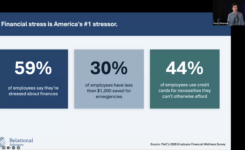
Why Financial Stress Is America’s #1 Stressor
Time: 4:16
Sam shares eye-opening stats on how many employees are stressed about money — and why so many turn to credit cards just to cover basic needs.
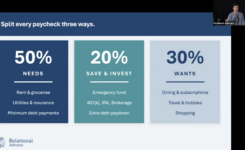
The 50-20-30 Budget Method Explained
Time: 14:00
A simple, practical breakdown of how to split your paycheck between needs, savings, and wants — the exact framework Mike and Sam recommend to every employee.
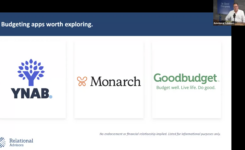
Use ChatGPT or Claude to Build Your Budget in Minutes
Time: 21:04
A surprisingly modern tip: Mike explains how to use AI tools to instantly turn your monthly expenses into a working budget.
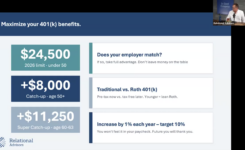
2026 401(k) Contribution Limits You Need to Know
Time: 23:44
Sam lays out this year’s exact contribution limits, including catch-up and “super catch-up” amounts for employees nearing retirement.
Roth vs. Traditional 401(k): Which Is Right for You?
Time: 25:48
Mike and Sam break down the real differences between pre-tax and Roth contributions — and share their personal take on which makes more sense long-term.
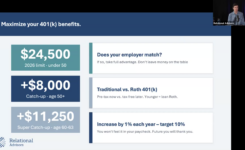
One Simple Trick to Boost Your 401(k) Savings Rate
Time: 28:00
A low-effort way to work your way up to a 10% savings rate without feeling it in your paycheck.

The Power of Compounding, Visualized
Time: 30:43
A simple chart shows exactly when compound growth starts to take off — and why patience in the first decade really does pay off.
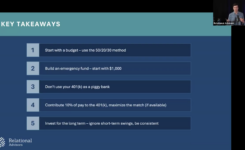
5 Financial Takeaways You Can Act on Today
Time: 42:03
A fast, quotable recap of the five most important steps anyone can take to improve their financial footing right now.
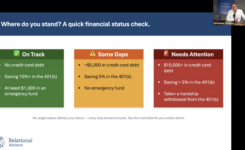
Don’t Lose Track of Your Old 401(k) — Here’s Why It Matters
Time: 45:57
Mike shares a real story about a client who lost track of a six-figure 401(k) balance — and explains exactly what to do with retirement accounts from past employers.

Is a 529 Plan Still the Best Way to Save for College?
Time: 59:03
Mike explains why he considers 529 plans one of the most powerful (and underused) financial tools — including new flexibility to roll unused funds into a Roth IRA.
Transcript
Mike
(0:00) Why don’t we go ahead and do it. (0:02) The saying that I always like in webinars is don’t punish the prompt. (0:07) So everybody that’s here on time, we’re going to go ahead and get started.
(0:10) And today we’re going to take about 40, maybe 45 minutes and go through what we call financial foundations. (0:16) So we’re going to cover a whole range of topics. (0:21) And this is the first of a series that we’re doing.
(0:25) And we’ll make the recording available. (0:27) But today we’re going to talk about financial foundations and then a little closer towards renewal open enrollment time. (0:34) We’re going to talk about benefits.
(0:36) And then we’ll push on through into next year with retirement planning and a whole host of topics. (0:44) And I’m joined here today with Sam Launder. (0:49) And Sam, many of you know from our retirement plan.
(0:54) I’m not sure if that’s forwarding there on the PowerPoint. (0:59) There we go. (1:00) Thank you.
(1:01) And so I’m Mike Rankin with Relational Advisors and joined here with Sam. (1:07) And we’re going to take some time and walk through what we think are really some really critically important topics around financial wellness. (1:16) But Sam, glad to have you.
Sam
(1:19) Yeah.
Mike
(1:19) And we’ll just go ahead and talk through the agenda and then we’ll we’ll go ahead and get started. (1:26) So, Sam, you want to take us through today’s agenda and what we’re going to cover?
Sam
(1:29) Yeah, absolutely. (1:30) So we’re focusing on some of the core tenets of financial wellness. (1:34) So a lot of the basics is what it typically boils down to.
(1:37) So we’ll be talking about why financial wellness matters and kind of the big picture here, building a budget, the power of saving. (1:46) We’ll talk about the 401k and some strategies that can help you maximize that retirement account. (1:52) Some investing basics, compounding and the time value of money, always important.
(1:57) And then a little bit at the end about for you to evaluate where you stand financially and then some tips for those different tiers of, you know, if you’re doing well, if you’re in the middle or if you’re struggling a little bit.
Mike
(2:09) Perfect. (2:10) And I would say, too, like the the primary reason that that we started this this educational series is that I do believe in my heart of hearts that we are all in this together, that we have this this attention economy that is constantly, you know, through our phones and screens and tablets telling us what to do. (2:32) And so this time period is is an opportunity to kind of step back and relax, make a couple of notes, two, three, four initiatives that you want to accomplish for yourself financially.
(2:47) We’re not here to sell any information. (2:50) This is really our belief at relational advisors that if we all as a community are on solid foundational footing, that it makes for more enjoyable livelihoods all the way around. (3:03) And so one of the things that we’re going to do at the end here is we’re going to we’re going to give away this book called The Total Money Makeover.
(3:12) And it’s not. (3:14) Can we advance the slide? (3:16) Thanks.
(3:17) So Total Money Makeover is it’s not our book. (3:21) We don’t have any relationship with the Dave Ramsey show, but you may have maybe familiar with it. (3:27) It’s very popular radio program as well as, you know, on Instagram and podcasts and so forth.
(3:34) But the reason that we we like it so much, it’s very simple. (3:37) It’s easy to understand. (3:39) And also, Ramsey and his crew, they’re not selling additional, let’s say, debt or credit card information.
(3:47) And so if you want to just put your email address in the chat, Casey’s going to be monitoring that. (3:53) And then we’ll kind of do a little raffle there towards the end for for the book. (3:58) And then we’ll we’ll go ahead and ship it to you.
(4:01) OK, so why financial wellness matters. (4:06) And I’m going to kick it back over to to Sam.
Sam
(4:09) Thanks, Mike. (4:10) Yeah. (4:10) So here we’re talking about the big picture and why it’s an important thing to look at now.
(4:16) So go ahead and jump to the next slide and I’ll talk through a couple of statistics that paint this overall picture. (4:22) So the theme here is that financial stress is America’s number one stressor. (4:28) And that stress can man itself, manifest itself physically and mentally and really take a toll on our everyday lives.
(4:35) So what we’re seeing is that, you know, 15, 59 percent of employees say that they’re stressed about finances. (4:41) So that’s kind of the context here. (4:44) And there’s a number of reasons for that stress around financial footing.
(4:48) And one of those reasons is this second statistic here. (4:50) So 30 percent of employees have less than a thousand dollars saved up for emergencies. (4:57) So what does that mean?
(4:58) It means when emergencies do come up, which they inevitably do, people have to turn to debt to be able to pay for them. (5:06) So oftentimes people will turn to their credit cards when they come up against these emergency expenses. (5:13) So we’re looking at this large portion of people that don’t have any money saved up specifically for emergencies.
(5:19) I mean, we’re talking about medical expenses, you know, fixing the car, fixing things at home. (5:24) So they turn to credit cards and we’re looking at 44 percent of employees using credit cards for necessities that they otherwise can’t afford. (5:33) It’s another term is survival debt, right?
(5:35) You’re not just taking out debt for things that are discretionary spending, but it’s for things that you actually need.
Mike
(5:40) Groceries, gas breaks.
Sam
(5:42) Yep.
Mike
(5:43) Transmission for the car.
Sam
(5:44) Yep. (5:44) And it’s because you don’t have any money saved up in a separate emergency fund that we turn to the credit cards. (5:50) And we also turn to our own 401k balances through hardship withdrawals.
(5:55) Yeah.
Mike
(5:56) And so when we look at that, you know, it’s no wonder, I guess, that credit card balances have been rising, right?
Sam
(6:06) Absolutely. (6:07) Yeah.
Mike
(6:07) And so what are we looking at here, Sam?
Sam
(6:08) So we’re just looking at the share of credit card holders with debt balances over $10,000. (6:15) Now, $10,000 is a bit alarming on a credit card bill, especially when we’re talking about high interest rates up to 25, 30 percent sometimes. (6:24) So we can see that, you know, the number was below 20 percent before the pandemic.
(6:30) And then through 2020 and 2021, that share of people actually declined who had those very, very high credit balances.
Mike
(6:38) On a government stimulus package and checks in the mail and all that.
Sam
(6:41) Yep. (6:41) So the government sent out a lot of stimulus checks as part of COVID, and that allowed people to pay off some of these high balances. (6:48) But since that time, the stimulus checks dry up and we see those balances begin to increase again.
Mike
(6:54) Yeah. (6:55) And so I would imagine that the higher the bill goes, the harder it gets to make those monthly payments, right?
Sam
(7:02) Yeah. (7:02) And we sort of have a one-two punch here in the economy. (7:05) So one is inflation, which has been persistent for the last few years.
(7:10) You know, it peaked in 2022 around 9 percent. (7:13) It’s since come down, but it still sits above 4 percent as of the last reading.
Mike
(7:17) Yeah. (7:18) And it certainly has come back in the last three, four months with, you know, gas prices and all of that.
Sam
(7:23) Definitely. (7:23) So we’re looking at sticky and high inflation in tandem with the highest interest rates we’ve seen in decades. (7:31) So not only do we have the cost of living being more expensive than it was previously, but now we have the actual interest rates on these credit cards has increased substantially.
(7:41) So before or in February of 2022, we had the average interest rate on a credit card around 14 and a half percent. (7:49) Since then, February of 2026, that rate has risen to 21 percent. (7:54) Wow.
(7:55) So we have high inflation and higher interest rates, which is contributing to the fact that more and more people are now 90 plus days delinquent on their credit card loans.
Mike
(8:06) Ouch.
Sam
(8:08) And another key point here is that this doesn’t only impact low income households. (8:14) We often think low income households are the ones that are faced with this stress of credit card debt. (8:19) And while they’re certainly faced with it to a greater extent, it’s a persistent trend, low income all the way through.
(8:26) So low income, medium income and high income earners are all seeing this trend where the percentage of their balances that are 60 days delinquent or more has increased substantially since 2021. (8:39) So the story here is not only that credit card balances are rising, but delinquency rates are also rising. (8:46) It’s because of that kind of broad financial backdrop we painted earlier.
Mike
(8:50) Yeah. (8:51) And so when we think about that, we say, OK, on its face, we’d say credit card debt is a bad thing financially, right? (9:00) We’re paying all this interest to the credit card companies.
(9:03) And we might say, oh, develop a plan to pay down your credit card debt. (9:08) It sounds easy, but it’s pretty challenging. (9:13) And we believe the most important component to that is building your budget, which we’re going to talk about in just a second.
(9:23) But can you talk a little bit about these terms, being a transactor and not a revolver, right? (9:30) What’s the difference when we’re talking about credit cards?
Sam
(9:33) Yeah. (9:33) So credit card companies actually group their customers into two different categories. (9:38) There are transactors.
(9:40) Those are the people that use the credit card throughout the month, but they pay the entire balance off every month consistently. (9:46) So the transactors are paying no interest on their loans because they’re paying the full balance off every month versus the revolver who keeps a balance rolling over each month. (9:57) So those are the people that are actually paying the 20, 25, 30 percent interest rate because they’re letting that balance roll over.
(10:05) Yeah.
Mike
(10:05) And it’s very hard at 20, 18, 20 or 22 percent interest to actually get that paid down. (10:14) If you’re only paying the minimum, you could be paying, you know, six, seven, eight, 10 years without making a meaningful debt. (10:22) And then over and above that, if you have a either a medical emergency or, you know, have the car breaks down, transmission breaks, whatever, then you end up putting more back on the credit card.
(10:35) And so people have this, you know, they’ve been increasing their debt amounts for five and 10 and 15 years, and it just becomes this, you know, emotional burden that people have to carry. (10:48) And so I kind of see it as two things. (10:52) The, you know, building your budget, which we’ll talk about here shortly, helps you not only pay down the credit card debt, but then also the most important thing, going back to that stat of about 30 percent of adult Americans don’t have a thousand dollars in savings.
(11:09) And I think about that thousand dollars in savings, that emergency fund, if you will, as being kind of like this shock absorber. (11:16) You know, when stuff happens, then at least you’ve got a little bit of cash put aside. (11:23) You’re not having to go right to that credit card.
(11:26) But Sam, maybe share a little bit of this stat of what we’re looking at here.
Sam
(11:31) Yeah, sure. (11:31) So in addition to going into debt to cover these expenses, when people don’t have the emergency fund, people are also tapping on their 401k plan or their retirement plan. (11:42) Over the last few years, the IRS has reduced some of the limitations to pulling money out early.
Mike
(11:47) Yeah. (11:48) And obviously- They’ve made it easier to pull money out.
Sam
(11:51) Exactly. (11:51) They’ve made it easier for people to pull money out of their 401k before retirement. (11:56) And it’s a retirement plan.
(11:58) The money is obviously meant to be left until retirement. (12:01) But they provide this hardship withdrawal provision, which allows people when they’re under heavy and financial need to pull money out early. (12:09) Now that can help you out in the short term, but there’s definitely a cost over the long term.
Mike
(12:14) Right. (12:14) Because you’re still, while you may have a little bit easier access, you still have to pay tax and then a penalty, right?
Sam
(12:22) Yeah. (12:23) So in addition to the standard income tax you’d pay, assuming you were making pre-tax contributions, the IRS also assesses a 10% tax penalty on these hardship withdrawals. (12:33) So in addition to the tax cost, you’re also losing out on that future compound growth by pulling your money out of the market and draining your 401k balance essentially.
Mike
(12:44) Yeah. (12:44) So it’s a double whammy. (12:46) You’ve paid tax and penalty, and then you’re also losing future growth in that.
(12:52) So how does one kind of go about hopefully avoiding that, either dipping into the credit card or dipping into your 401k?
Sam
(13:01) Yeah. (13:01) So it’s setting up an emergency fund. (13:03) So that’s a fund or an account that’s specifically meant for the car breaking down or a medical emergency or something like that.
(13:11) It’s a separate account from your retirement. (13:13) It’s separate from your checkings. (13:14) And it’s just that foundational bedrock so that you have that cushion in case these things do come up.
Mike
(13:20) Yeah. (13:21) And then having that allows you to not have to use your 401k as the piggy bank.
Sam
(13:27) Or go into debt.
Mike
(13:28) Yeah. (13:29) Or go into debt either way. (13:30) So one of the things that we see is that from time to time, they’ll build up their emergency fund, but then kind of life gets in the way, right?
(13:41) And this is where we feel like building the budget is the absolute critical first step to having financial success over the long term. (13:53) And so, Sam, if you kind of walk us through the general structure here on building the budget.
Sam
(14:00) Yeah. (14:00) Sure. (14:01) So there’s a pretty common budgeting method known as the 50-30-20 method.
(14:06) We’ve rebranded it a little bit to 50-20-30. (14:10) And all this means is once it comes up on the slide, you’ll see that 50% of our budget or 50% of our income is going towards our needs. (14:19) So the things that we absolutely must pay.
(14:22) So that’s rent, that’s insurance, that’s medical costs. (14:28) Sorry, we’re having a little trouble with the clicker here. (14:32) But essentially half of all your income and half of your pay should be going to the things that you need.
(14:38) And then once we’ve taken out that 50%, we’re going to allocate another 20% to what I call save and invest. (14:46) So 50% is going to needs, 20% here, it’s up on the screen, is going to saving and investing. (14:51) So that would be that emergency fund that we talked about.
(14:55) And then after the emergency fund is kind of built up, we can go towards more investment-heavy accounts like a 401k, an IRA, or a brokerage account. (15:05) And we also have in this category extra debt pay down. (15:08) So within the 50% going to needs, that would be your minimum debt payments because you need to make those minimum payments to the credit card companies.
(15:16) And then within the 20% that we’re calling save and invest, we’re saying you can allocate additional amounts above the minimum payments so you can actually start to work those debt balances down. (15:27) And the reason we put the 20 in front of the 30 is because we think the 20 is obviously more important here, especially if you have credit card debt that you need to pay down.
Mike
(15:38) So once you’ve satisfied- That becomes the priority. (15:40) Exactly.
Sam
(15:41) It’s an order of priority. (15:43) So we’ve done the 50 to needs, we’ve done the 20% to save and invest and those extra debt payments. (15:48) And now 30% we can spend on things that we enjoy.
(15:51) So the beauty of the 50-20-30 budget is while it is a disciplined approach to money management, it also gives you some flexibility to be able to do the things you want, dining out, subscriptions, Netflix, HBO, travel and hobbies and shopping. (16:08) So it does provide a pretty general framework. (16:11) And obviously these percentages can be tweaked depending on where you are.
(16:15) If you have a ton of credit card debt, maybe the save and invest and the needs is a little bit higher and cut down on some of those wants. (16:23) Right.
Mike
(16:31) You can probably just advance it on the screen there. (16:36) So when we are talking about building you’ve got the emergency fund, but then also the safety net, walk us through that a little bit.
Sam
(16:48) Yeah. (16:49) So the emergency fund is just that it’s a safety net. (16:52) It’s there in case you need it.
(16:54) And oftentimes these emergency expenses inevitably arise. (16:58) So we recommend just starting small because ultimately the target of an emergency fund, I would say is between three to six months of living expenses. (17:08) And while that figure may be daunting, once you actually write everything down, you can start small, start with a thousand dollars and build your way up towards that overall target.
(17:17) So we’re telling people to keep it separate. (17:20) That’s one of the primary things here. (17:22) Make it a separate account in a high yield savings, separate from your checking, separate from your other investment accounts, and also set up automatic transfers.
(17:30) So every time you get paid, you have 50 bucks or a hundred bucks going into the emergency savings account. (17:36) That way it’s not a transfer you have to make. (17:39) It’s set up automatically.
(17:40) And we barely feel it after a while because that’s just part of our pay cycle.
Mike
(17:45) And I know a vast majority of payroll companies, if not all, will allow you to have a second direct deposit. (17:53) So if you have your main, that’s going into your checking, you could set up a second direct deposit for the budgeted amount, 50, a hundred bucks, 25, whatever it is. (18:02) And that goes directly into the savings.
(18:04) That way you’re just kind of doing that automatically. (18:06) Yeah.
Sam
(18:07) And another point is this, again, is separate from the 401k. (18:11) So while we’re making automatic contributions from our paycheck to the 401k, we’re also making automatic contributions to the emergency fund. (18:19) And we’re talking about low risk, stable investments.
(18:23) So I would recommend a money market fund or a high yield savings account. (18:28) This is a safety net. (18:29) It’s not a way to make up for lost time, right?
Mike
(18:32) Right. (18:32) And I do see that sometimes where somebody says, gosh, I haven’t been saving enough. (18:39) Maybe I had some credit card debt, I just got it paid down.
(18:43) And I’ve got this, now I’ve got five or $10,000 built up, where should I invest it? (18:49) My question always back to them is, what is the time horizon for that money? (18:55) Is that three-year money, five-year money, 10-year money?
(19:00) And so I think sometimes people, when they get that amount built up, like, oh, I want to go invest it. (19:07) But you really need to be careful if this really is your three to six months of expenses and your cushion, you want to keep that. (19:17) Yes, get a high yield account, get as much interest as you can, but you really want that stable.
(19:22) That’s not going to be your long-term investment growth.
Sam
(19:27) Yeah, absolutely. (19:28) And kind of the final point here is rebuild it after you use it, because oftentimes we have these accounts because we’ll eventually need them. (19:35) So let’s say you have a thousand in there, car trouble comes up, you pay the thousand to fix the car, make sure you get back on the horse and keep making those automatic transfers, work your way back up to a thousand, and ultimately on your way to that six-month overall target.
Mike
(19:49) Yeah. (19:49) And that, again, is where the budgeting becomes really, really important. (19:53) So what are we looking at here?
Sam
(19:57) So these are just a few budgeting apps. (19:59) We’re not affiliated with any of them, but these are some that have very high reviews and they’re known for maybe not doing the things that some of the not-so-great companies are doing where they’re selling debt consolidation or they’re selling other credit cards, right?
Mike
(20:14) Yeah. (20:15) And that’s one thing I would point out when we talk about there are a lot of credit card sites out there, not necessarily issued by the credit card companies, but there are a lot of debt reduction and credit informational sites out there that at the end, really what they’re trying to do is sell you another credit card or roll over your balance or do debt consolidation. (20:43) Now, there may be some extreme situations where you need to work with a nonprofit.
(20:48) If you haven’t been paying your bills and you’ve got a lot of late charges, they can help negotiate that in a dire and dramatic situation. (20:57) But for most of us that have three or five or $6,000 of credit card debt, it’s really going to come down to budgeting. (21:04) And if anybody’s using Claude or ChatGPT, you can take your last couple months of expenses and just paste it in there and have it build you that 50, 30, 20 budget.
(21:20) Now, what these sites are great for is tracking your ongoing expenses. (21:26) And sometimes people say budgeting, and then they roll their eyes and say, don’t think about it as budgeting as much as just tracking what you spend. (21:34) And you really have to do it over the course of a year, because where I see a lot of people fall down or have a shortcoming on the budgeting is they forget things like, oh, that life insurance bill is due every year, and it’s $500, and I forgot about that.
(21:52) Or my auto insurance renews in February, or I forgot about that. (21:57) So a lot of times, months to month is easy to track, but you really have to look at it on an annual cycle to get the full picture. (22:05) And that’s where I see people often overestimate their income and underestimate their expenses.
(22:12) And so on paper, it looks fantastic, but the practical reality is that they end up dipping into the credit cards again, or that balance goes up, or take a loan from the 401k plan. (22:25) And I would say, speaking of the 401k, which we’ll transition to here, is that what we often see is if somebody says, okay, I’ve got this credit card debt, I’m going to take a loan from my 401k, not even a hardship distribution, but I’m going to take a loan from the 401k, and then I’m going to pay down the debt, and then everything’s going to be good. (22:46) And all of that sounds great, but unless you do the difficult work, the challenging work of budgeting, then oftentimes what happens is two or three years down the road, what’s happened?
(22:59) Because we haven’t budgeted, we’ve got more back on the credit card. (23:02) Now we have a 401k loan that’s outstanding, and it’s just a different part of the cycle, but you haven’t broken the cycle of the budgeting.
Sam
(23:11) Yeah. (23:11) You’ve given yourself a temporary fix instead of figuring out what’s actually going on underneath the hood.
Mike
(23:16) Correct. (23:16) Correct. (23:17) So while we’re on the topic of 401k, let’s kind of talk about that, change gears a little bit.
(23:24) Casey, are there any questions that we should… (23:28) Okay, great. (23:29) So if you do have any questions, you can throw them in the chat or the Q&A.
(23:37) Okay. (23:37) Yeah. (23:38) So the Q&A, if you want to throw any questions in there, go ahead.
(23:43) So Sam, back to you on the 401k.
Sam
(23:44) Yeah, perfect. (23:45) So we’ll talk about kind of how you can maximize your 401k benefits. (23:49) Now, obviously we’ve been talking about budgeting, that’s the foundation, and then you can kind of work your way into maximizing your retirement plan.
(23:55) So just from a dollar’s perspective, the IRS sets annual limits for how much we can contribute to the plan every year. (24:03) Based on cost of living adjustments, those numbers typically go up over time. (24:07) So in 2026, anybody under the age of 50 can contribute $24,500.
(24:15) That’s from their own paychecks. (24:17) That does not take into account any employer contribution or employer match on top of that. (24:22) If you were between the ages of 50 and 59, you can do what’s known as a catch-up contribution.
(24:28) So it’s an additional 8,000 on top of the 24,500. (24:31) And then the super catch-up, what we’re calling it is people between the ages of 60 and 63 can contribute an additional 11,250 on top of that standard 24,500.
Mike
(24:44) I’m not there yet, but I’m getting close.
Sam
(24:45) Getting close. (24:46) Yep. (24:47) So if you’re somebody that’s really worked your budget and you’re interested in purely maximizing your retirement account, you can contribute up to the limit based on your age, and then you’ll get any employer contribution or employer match on top of that.
(25:00) If you’re not contributing up to those limits, we would definitely recommend contributing enough to where you’re capturing any employer match or employer contribution dollars that your company may contribute on your behalf.
Mike
(25:12) Right. (25:13) So if my employer is doing, let’s say, 50 cents on the dollar up to 4%, then at least set it at that 4%, assuming that that number is workable within your budget. (25:27) And so assuming that it is, then set it at four, you’re maximizing the match, get your credit card debt paid down, your outside debt paid down, and then you can look at lifting it up to 5%, 6%, and 10%.
(25:39) Definitely.
Sam
(25:40) So definitely starting by taking advantage of the match or employer contribution. (25:44) Otherwise, you’re just leaving money on the table. (25:47) So start there.
(25:48) And then another thing with the 401k that people talk about is these different tax statuses. (25:53) So we have the pre-tax or the traditional 401k, and then we have the Roth 401k, which is after tax. (25:59) The traditional is where you’re getting pre-tax contributions at the front end, and then you’re paying income tax in retirement versus the Roth where you pay the tax upfront, and then you get the advantage of tax-free growth and tax-free withdrawals in the future.
Mike
(26:14) Right. (26:15) So it’s hard to see that far into the future, 10, 15, 20, 30, 40 years. (26:20) But one would say, historically speaking, our federal tax rates are quite low on a relative basis.
(26:29) And if you look at the debt levels that the country has, one would argue those probably need to go up over time. (26:38) And so that certainly would be an argument to the Roth in support of the Roth. (26:45) The other thing that I like to think about is being able to hedge your future withdrawals when you go to retire.
(26:52) If you’ve got a bucket of money that’s in the traditional, so it’s taxable, then you have a bucket of money that’s going to be Roth and therefore tax-free. (27:03) You can kind of blend your withdrawals out of those to manage your tax bracket and status. (27:09) So I like having that little blend, but there are some people who just believe very, very strongly in the Roth, as do I, and that could be certainly very, very powerful.
Sam
(27:21) Yeah. (27:21) And the Roth is definitely great. (27:22) Those tax-free withdrawals are huge.
(27:24) One thing I would say in favor of pre-tax is if you’re somebody that has a lot of current life expenses, you have multiple kids, you have a mortgage that you’re paying, maybe you just need the tax break today. (27:35) And it just alleviates some of that budget pressure. (27:38) So pre-tax can make a ton of sense if you’re in that bucket of people.
Mike
(27:42) Yeah, for sure. (27:44) And in fact, for a number of years, when we had the kids going to school and all of that, and I was trying to put money in the 529s at the same time, I did. (27:53) I did the traditional and just took the tax break because I needed it that year.
(27:59) Okay. (28:00) So what if I’m at my 4% right now, because that’s where my employer matches, or 6% or something, what’s your recommendation around the percentage?
Sam
(28:09) Yeah. (28:10) So that’s a great start. (28:11) If we’re maximizing the match dollars, we’re at 4%.
(28:13) Great start. (28:14) We’re off and running, but I would recommend working our way up to, let’s say, a 10% target. (28:19) And you can do that just 1% per year and just have it automatically escalate each year.
(28:25) And those little 1% each year, you probably won’t feel it too much in your paycheck, but by the time you get to a 10% savings target and you’re doing that for a number of years, future you is going to thank you for making those escalated contributions.
Mike
(28:40) Well, and that’s actually, that’s a great point. (28:42) And it’s another reason that I like the Roth in that I feel like today I’m earning income and when I am kind of deep into my retirement, God willing, I’m going to need that money, every cent of it at that point, which I kind of like the Roth for that. (29:02) So one of the things I always like to say is the 401k, we often overthink it, but there’s really only two things you need to decide.
(29:10) How much are you going to put in, which comes down to budget and match and the target of 10%. (29:15) And the second is, where am I going to put it? (29:18) So in transitioning to the investing basics, the light bulb went on for me, even though I’ve been in the 401k and retirement business for a long time, really since the nineties and the start of my career, when we opened up the 529, which is the college savings accounts for the kids when they were born.
(29:42) And we started putting into those. (29:45) By the time they went to college, about 40% of the money that we had in the 529 was tax-free growth on the principal investment that we had made. So, you know, that was over an 18-year period and I thought, wow, that is the time value of money really at work.
Mike
(30:05) And there are a lot of financial challenges and problems that we can solve if you have a 20-year runway. (30:12) It’s very difficult to do that in two years.
(30:15) I think, you know, the human brain is also not always geared to think 20 years ahead. (30:23) But if you just start, you know, day by day and kind of chip away, it’s that time value of money and time being your greatest asset. (30:32) And so we have, you know, kind of a chart here that’s looking at that.
(30:35) Why don’t you take us through this, Sam?
Sam
(30:37) Yeah, so just kind of showing what the time value of money means in terms of compounding returns over a long period. (30:43) So we’re looking at somebody that’s investing $200 a month and they’re getting, let’s say, an average annual return of 7% per year in the market. (30:51) And what’s important here is we have kind of two bars with each, you know, column on the graph.
(30:56) We have the light blue, which is just our principal, the amount that we’re contributing. (31:00) And then we have kind of the darker teal here, which is our overall portfolio value. (31:05) And we see that the amount contributed is increasing linearly because we’re just making $200 a month contributions.
(31:11) But what is an exponential growth here is the portfolio value. (31:15) And when we really see that start to kick in is around year 20, 25, and 30.
Mike
(31:20) Exactly. (31:21) Well, and what I say often for both retirement plans or 529 plans is don’t expect anything magical to happen in the first 10 years. (31:33) And it sounds like kind of a crazy statement.
(31:36) What do you mean 10 years? (31:37) That’s a decade. (31:38) Believe me.
(31:39) And this chart bears it out. (31:41) And you can see now at 20 years is really where that spread between what you’ve put in and what your account balance is really starts to grow. (31:52) Obviously, over 25 and 30, it increases dramatically as well.
(31:57) So when we think about the long term investing, we’ve got these kind of three concepts here, diversify, stay the course, and start now. (32:04) How do you think about those?
Sam
(32:06) Yeah, so I just think they’re kind of basic tenants to what we need to do to invest over the long term. (32:11) So one, staying diversified across different asset classes, having downside protection in case the market takes a dive. (32:18) I think target date funds and target risk funds are great for this because they automatically diversify us.
(32:25) And they also automatically rebalance us every quarter.
Mike
(32:28) And what does rebalancing mean?
Sam
(32:30) So rebalancing is just basically resetting our allocation, whether that’s between stocks and bonds or different asset classes, back to our original intention. (32:39) So let’s say we had a 60-40 portfolio, 60% stocks, 40% bonds. (32:45) In a particular year, the stock market may do much, much better than the bond market.
(32:49) And by the end of that year, we may be looking at more of a 70-30 split from stocks and bonds. (32:54) So in order to rebalance, we would shift back to our 60-40 and kind of reset that process. (33:01) So that’s kind of diversifying.
(33:03) Again, I recommend those target date and target risk funds as long term investment vehicles. (33:08) And then a huge piece that we always kind of emphasize is staying the course, right? (33:13) It’s very easy to get caught up in the day-to-day of the market, especially you and I who kind of watch it every day.
(33:19) It’s a wild ride, and it goes up and down. (33:22) And in the short term, it’s a bit of a roller coaster.
Mike
(33:25) Absolutely.
Sam
(33:26) But ignoring those short-term swings, while it is difficult, it is the prudent decision, and it allows you to kind of focus on the bigger picture and take advantage of the times when the buying and you’re still picking up shares now at a lower cost.
Mike
(33:42) Yeah, that dollar-cost averaging really helps over the long term. (33:45) So when we think about this to kind of pull it all together, and so for our audience that’s watching and listening along, what are some of the action items that we might take? (33:59) Like, how do I think about this if I’m a participant watching?
(34:02) Like, okay, Mike, Sam, great information, but how do I put this into action?
Sam
(34:07) Definitely. (34:08) Yeah. (34:08) So I think the first thing to do is do a little financial check of where you are.
(34:12) Are you on track? (34:14) Are you in the some gaps category? (34:16) Or does your financial situation need some serious attention?
(34:19) So I think the people that are on track, and these are obviously general assumptions here, people with no credit card debt, people that do have at least $1,000 in an emergency fund, and then people that are saving, let’s say, 10 plus percent in the 401k every year. (34:35) So those people, they’re doing quite well. (34:36) They’ve kind of got all those boxes ticked.
(34:38) I’d say kind of keep doing what you’re doing and build on it. (34:42) Now, the some gaps category is where we’re kind of dipping into some of these topics we’ve been talking about. (34:49) So let’s say you have around $5,000 in credit card debt, and the average credit balance in the United States is actually 6,500.
(34:58) Well, 5,000 is like a lot. (35:00) It’s actually below the national average.
Mike
(35:01) And that’s of those that have a revolving balance, right? (35:04) The transactors are at zero. (35:06) So this is of the group that has a debt balance, 6,500 is the average.
(35:13) Correct.
Sam
(35:14) So yeah, if you’re somebody in that middle category, you have around 5K in credit card debt, you’re saving, let’s say, 5%, maybe less in the 401k. (35:22) But the big piece here is you don’t have an emergency fund, and that’s causing you to continue the credit card debt cycle. (35:28) So that’s the some gaps category.
(35:30) And then over on the right, this is where you need to step in immediately and make some tweaks here. (35:34) So these would be people with $10,000 or more in credit card debt, saving, let’s say, less than 5%, typically nothing.
Mike
(35:42) Probably zero.
Sam
(35:42) Probably nothing in the 401k. (35:44) And not only do they not have an emergency savings account, but they’re using their 401k as that emergency savings. (35:51) They’re using it as a piggy bank.
(35:52) They’ve taken either a loan, a hard-earned withdrawal, or both. (35:55) And that’s compounding the issue, right?
Mike
(35:57) Yeah. (35:57) It’s like triple threat, triple danger, right? (36:01) You have all this interest going out to the credit card companies.
(36:05) You’re then at the same time not saving in your retirement plan just because of the budget shortfall. (36:12) And then at the same time, you might even be borrowing from what 401k savings you did have. (36:19) So yeah, that’s a kind of a dire situation that needs immediate attention, right?
Sam
(36:27) Yeah. (36:27) So I think kind of looking at these categories, figuring out generally where you are, where you stand in financial footing, and then these are some action items. (36:37) So like we said, for the green people, we have max out your 401k contributions.
(36:42) You’re doing great. (36:42) Maybe you’re contributing 10%. (36:43) You probably have the budget that’s rock solid at this point.
(36:48) So look at what your actual dollar limit is in terms of contributions and max it out because future you is only going to thank you. (36:56) And then if you do have an emergency fund, let’s say you have anywhere between a thousand and 10,000 saved up, work your way up to that top end of the target, six months of living expenses.
Mike
(37:07) And the one thing I would just say on that, Sam, is for those online who are more my age, right, in their 50s, and we remember going through 2007, eight, and nine, where unemployment went through the roof. (37:25) I think we went to maybe 11 or 12% or something like that. (37:30) And what we’re talking about here is having these foundations, these shock absorbers, these cushions, so that should unemployment tick up again.
(37:39) And if one were to lose their job, or maybe it takes longer to get a new job, but in the last six years, COVID was a very strange time and an odd blip. (37:53) But even back before that, we’ve been looking at unemployment rates that are like three and a half, four, four and a half percent. (38:00) It has greatly changed economy, but from an employment standpoint, it’s been as good as it can be almost for quite some time.
(38:11) So I just kind of throw that out as a reminder when we talk about, why do you need maybe three or six months? (38:17) Because it could be that it takes you longer to find that next job. (38:21) And in that case, you don’t want to have to be putting money on the credit card or going backwards.
Sam
(38:27) Okay. (38:28) So, and then that middle group here, just some kind of tips for closing the gaps. (38:32) I would say working on those credit card debts is paramount.
(38:36) I would tell people to pay beyond the minimum.
Mike
(38:39) So you’re obviously- Without question.
Sam
(38:40) Making those minimum payments, but increase the payments. (38:44) That’s the only way you’re going to make a real dent in, let’s say a $5,000 balance. (38:48) So even $25 added on top of your minimum payment can make a difference.
Mike
(38:53) Yeah. (38:53) And I know we don’t have a slide on this, but I love, there’s a website calculator.net and it’s really just open free calculators, but they have a credit card estimator on there where you can plug in your balance, you plug in the interest rate, and then you can put in your minimum and you can see how long it’s going to take you to pay that off. (39:13) And then if you want to add a hundred a month, 200 a month, 300 a month, whatever the number is, it can show you how quickly you pay that down and how much less interest that you pay.
(39:21) So calculator.net is a great resource for that.
Sam
(39:24) Yeah. (39:25) Agreed.
Mike
(39:26) And our third category.
Sam
(39:27) Yep. (39:28) Third category is, maybe we’re in the weeds here, but it doesn’t mean we can’t pull ourselves out. (39:33) So I would say the first and most important thing is reevaluate the budget.
(39:38) If you’re in this category, the budget clearly hasn’t been working or it’s non-existent. (39:43) So I would recommend tracking your expenses over the course of a year. (39:48) So you know where all your dollars are going.
(39:50) You know, any of these hidden subscriptions that you may have lying out there somewhere. (39:54) And you’re going to probably need to pull back on that wants category of our 50, 30, 20 budget method. (40:00) So start the budget, reevaluate the budget and pull back on those wants.
(40:04) And then again, if we’re looking at $10,000 in credit card debt, that’s a flashing red light. (40:10) I would say prioritize that and focus all your effort on it. (40:14) There’s a couple of different ways that people go about paying off credit cards.
Mike
(40:19) The avalanche or the snowball, right?
Sam
(40:20) Yeah. (40:21) And this typically applies when you have multiple debts.
Mike
(40:24) I don’t know why they’re both like, you know, snow related.
Sam
(40:26) Yeah. (40:28) Yeah. (40:28) Right.
(40:29) So these typically apply to people, like I said, that have multiple outstanding balances, whether they’re all credit cards or credit cards or four or whatever.
Mike
(40:37) Yeah.
Sam
(40:37) Right. (40:37) So the avalanche method is what I would consider the more mathematical approach. (40:42) And that’s just, you find the card or the loan that has the highest interest rate and you just aggressively pay that down first.
(40:49) That way you’re paying the least amount in interest expense. (40:52) But that can also be difficult because those are often the largest and most daunting to tackle. (40:58) So that’s why we have a snowball method, which just means instead of targeting the loans with the highest rates, we target the loans first that have the smallest balance.
Mike
(41:08) The smallest balance. (41:08) And that is, I think, a Dave Ramsey concept that he believes in. (41:14) And I don’t know that it really matters which way you go as long as you’re attacking the plan.
(41:20) I do think the snowball, I kind of like that because if you’re attacking the smallest balance, you get a win off of that, you know, getting that paid down to zero and cutting up that credit card. (41:31) And then you take whatever you’re paying and you apply it to the next one. (41:34) And so it has a way of snowballing and speeding up, you know, once you start getting these knocked down one after the other.
(41:42) But I do like that just because you can kind of get that early win.
Sam
(41:46) Yeah.
Mike
(41:48) Okay. (41:48) So if we were to wrap it all up here, let’s kind of take us through this, Sam.
Sam
(41:56) Yeah, sure. (41:56) So just five key takeaways that I think, you know, you guys should either write down or just kind of keep in mind going forward, starting with a budget. (42:03) That’s the foundation and we kind of hark on it, but it is the bedrock of everything above that.
(42:08) So start with the budget. (42:10) Look at that 50, 20, 30 method as a general template. (42:14) And then part of building that budget is setting aside money for an emergency fund.
(42:18) Start with a thousand and work your way up to that six month target. (42:23) We talked about it, but not using the 401k as a piggy bank. (42:26) And it can be tempting.
(42:27) We saw that, you know, the number of people taking hardship withdrawals has quadrupled since 2020. (42:32) So it’s a growing trend and it’s not something that either you or I like to see, but we just strongly recommend leaving your money in the 401k.
Mike
(42:40) Well, the other reason it gets tempting, and I was thinking about this. (42:43) So let’s say that I started in the workforce at 25 and now it’s 10 years later, I’m 35. (42:48) And, you know, maybe I’ve got $100,000 built up in my 401k or $80,000 is a significant sum of money.
(42:58) And yet maybe I only have a thousand or two in my checking or savings and I’ve run up, you know, three, four, five grand of credit card debt. (43:07) It is very tempting to then take a loan, even if you’re not doing a hardship, take a loan from that 401k, pay off that credit card debt. (43:14) You say, well, I’m paying 22% over here.
(43:17) And my loan on my 401k is only seven or eight and I’m paying the interest back to myself. (43:21) It’s a very compelling argument, but again, that could be a very slippery slope. (43:26) And what often people miss is the growth on that, on that money down, down the road.
(43:32) So I would much rather see in that particular case, focusing on the budget, getting that credit card paid down and letting that 401k do its thing.
Sam
(43:42) Definitely.
Mike
(43:43) Number four.
Sam
(43:43) Yeah. (43:43) Number four. (43:44) So we recommend a kind of a general target of 10% of your pay going into the 401k.
(43:49) If your company does an employer contribution or a match that goes on top of it and that, that gets you into some real good saving territory. (43:56) So maximize the match if you have a match available. (44:00) And then finally, we’re focusing on the longterm, right?
(44:03) 401ks are 30, 40, 50 year investing journeys. (44:07) So ignoring those short-term swings and doing your best to leave the emotions at the door and just being consistent in the investing process.
Mike
(44:15) Got it. (44:15) Fantastic. (44:16) Good stuff.
(44:18) And now Casey, do we have anybody in the Q&A that, do we have any questions? (44:28) And so if you do want a shot at winning the book here, The Total Money Makeover, just put your email in the Q&A and we’ll look at it here shortly. (44:42) Questions?
(44:49) Yep. (44:50) Okay. (44:50) So the question is, what should I do with a 401k account from a previous employer?
(44:56) And you really have two options. (44:59) One is to roll that to an IRA, individual retirement account, and that you can open up at Fidelity or Schwab. (45:08) You can go online and do that.
(45:10) The other option is to roll it into your current employer’s 401k plan. (45:16) And I actually, I like both options. (45:19) If you already have a Fidelity or Schwab account, and obviously you can use any other money manager that’s out there.
(45:26) We refer to those two because they are set up for what we call retail investors, right? (45:32) Like yourselves. (45:33) And you can go online and set up very quickly.
(45:37) If you already have an account with them, it might be easy to open up that IRA, individual retirement account, roll it over. (45:45) As long as you do that direct transfer, there’s no taxation on it. (45:49) Or if you don’t have one of those accounts that seems a little daunting, absolutely roll it into your current employer’s 401k plan.
(45:57) So those are the two choices. (45:58) What I would absolutely recommend is that you do roll it out of your old employer’s 401k plan. (46:07) Think of it like this, that money is your money and you want it titled to you.
(46:12) So title it to yourself, either in an IRA or your current employer’s 401k plan. (46:18) Don’t leave it with an old employer. (46:20) You’re not an employee there anymore.
(46:23) I can tell you that we have had a occasions where we’ve had participants call us and say, hey, Mike, Sam, I need help finding 401k money from 15 years ago. (46:36) I’m not even kidding. (46:38) And they left, I think about 100,000 was the most that we’ve seen so far.
(46:44) They left it with the old employer. (46:46) And then that employer got bought, that employer got bought. (46:50) And then the final one, they went out of business.
(46:53) And so the money is somewhere. (46:56) It wasn’t stolen by the employer. (46:59) It’s sitting in some fund, some trust somewhere, but you can’t find it.
(47:03) And then that person had moved three or four times. (47:06) So I’m really belaboring that answer. (47:10) But absolutely, if you have old money or your money with an old employer, roll it out, roll it to an IRA or roll it to your current 401k plan.
(47:25) Okay. (47:25) Yeah. (47:26) So the question is, what about an ESOP, E-S-O-P?
(47:30) So that’s an employee stock ownership plan. (47:36) And that is a different type of retirement plan for companies that are owned by their employees. (47:44) And ESOPs are great.
(47:47) And I would say, if you are investing in the ESOP, you probably also want to be investing in the 401k. (47:57) So just treat it like another investment. (48:01) And so the potential downside of an ESOP would be, as with any employee that’s buying, let’s say, their employer stock, you don’t necessarily want to be overweighted in your employer stock because you end up having your job is there, your income is there, and then also your equity is there.
(48:21) So ESOPs are a great way to build wealth. (48:26) They’re very powerful, but I would also diversify amongst the other investment options that you have. (48:36) Yeah.
(48:37) So the question is, can I have a Roth in addition to having a 401k? (48:42) And the answer is yes. (48:46) And it also depends, right?
(48:49) So first of all, within the 401k plan, you can, assuming your employer has that Roth feature, which just about everybody does now, you could put money into the Roth 401k as opposed to a Roth IRA, right? (49:06) So these are, they’re both using the term Roth, but they’re separate. (49:10) And you can put in up to the $24,000 max in a Roth 401k without any questions there.
(49:19) So from that standpoint, you can definitely do that. (49:23) You can also, if you’re below the income threshold, you can do a 401k and also open up a Roth. (49:32) But if you’re above the income thresholds, then you would have to open up what they call a backdoor Roth, where you do a deductible IRA.
(49:39) I would say for 90, 95% of people out there doing, just kind of, if you’re a believer in the Roth, then maximize that Roth 401k. (49:49) Okay. (49:59) So the question is if, let’s say I’m going to put in $2,400 a year, and is it better, or does it change the return if I do $200 per month versus $2,400 a year?
(50:16) Now that really gets to, in the big, big picture, not all that much. (50:23) Technically it would, but it on when you put the $2,400 in, right? (50:27) If you put the $2,400 in at the beginning of the year, then if you do that each and every year over, let’s say a 10 year period, yes, you’re going to have slightly more money because the money has been working for you longer.
(50:40) If you put the $2,400 in at the end of the year, then you would have slightly less because it’s got less time value of money to work for you. (50:48) If you’re putting in $200 per month, then you’re going to be kind of right in the middle. (50:55) So I would say the, kind of the least stressful way to do it is to do it at the $200 a month.
(51:03) That way, as the market is going up and down, you’re kind of dollar cost averaging. (51:07) You’re technically buying a little less when the market’s high and you’re buying a little more when it’s low. (51:13) And that way you don’t have to worry quite as much about market timing.
(51:28) Great question. (51:29) Sam, do you want to take that one and repeat the question?
Sam
(51:31) Yeah, sure. (51:32) So the question is if you’re in that needs attention category and you are contributing to your 401k, should you stop contributing or pause contributing to the 401k and focus on the credit card debt? (51:45) I would say it depends.
(51:46) I think if your 401k plan does not have any employer matching, then I would say it makes a decent amount of sense to pause and focus some of that budget on the credit card debt. (51:58) Now, if you’re getting a match where it’s, let’s say 50% up to six and you want to capture some of that match, you could definitely split it up where you’re still making some contribution, getting some of those free dollars from the company and also paying down the debt. (52:12) But again, I think it depends.
Mike
(52:14) Yeah. (52:14) And I would say, Casey, if you want to drop Sam’s email in the Q&A, people can kind of pick it up from there. (52:21) Just sam at relational.com.
(52:23) If you are in the needs attention category and you would like to talk to us a little bit further, you could pick up Sam’s email there and we’re happy to maybe point you to some resources. (52:37) I would say even if you’re in the needs attention category, but you feel very confident about your budget and that budget allows you to still put in some and capture that employer match, then yes, I would do that. (52:52) But often people in the needs attention category maybe aren’t feeling too confident about their budget.
(52:58) And so taking a short break might be a way to just chip away at some of that debt in a much more rapid fashion. (53:08) I think that’s okay to do. (53:09) If you do turn off the 401k, what I would strongly recommend is set a calendar appointment for yourself a year or 18 months down the road and revisit because you’d be shocked at how quickly one year turns into two years, turns into three years, and then you’re really behind the game there.
(53:29) But again, if you reach out to Sam and we’d be happy to set up a follow-up call. (53:40) So the question is, my spouse doesn’t have a 401k at the moment. (53:44) Should I double my contribution?
(53:49) If you can afford that, I would say that absolutely would be something to look at and is a good idea. (54:02) The answer also depends. (54:05) If your spouse, let’s say maybe is self-employed and working maybe as a consultant or freelance or something, then your spouse could do a SEP or a solo 401k.
(54:19) They could put money in for themselves. (54:23) If they’re generating earned income from their employer, they could probably do a Roth IRA. (54:33) If you’re over the income thresholds, then you might have to do a non-deductible IRA.
(54:39) But yeah, there are a lot of choices there. (54:41) And I do like having both spouses contribute. (54:47) And I think it’s healthy all the way around.
(54:50) But certainly, you could lift yours up. (54:53) But there are a lot of other ways to have your spouse contribute depending on their scenario. (55:08) For HYL.
Sam
(55:13) Oh, high-yield savings account.
Mike
(55:14) Oh, yeah, yeah, yeah.
Sam
(55:15) Yeah. (55:16) I mean, I think there’s a lot of these online banks that do offer great interest rates, SoFi being one of them. (55:21) I don’t remember what the other one they said was.
(55:24) I mean, obviously, name brands bring brand recognition. (55:28) But I think as long as it’s FDIC insured and it’s an online bank that’s giving you a decent interest rate, I think that’s a good move.
Mike
(55:37) Yeah. (55:38) Yeah. (55:38) And I think making sure it’s FDIC insured obviously is important.
(55:55) Okay. (55:56) Great question. (55:57) And I think a lot of people are in this situation.
(55:59) So the question is, maybe I don’t fall neatly into one of the three color-coded boxes here. (56:07) So you have an emergency fund, but then have $10,000 of credit card debt and are also contributing to the 401k. (56:18) That is a scenario where I think there’s probably a very good argument for reducing your 401k contribution for a short period of time.
(56:29) This, again, I’m going to sound like a broken record going back to the budgeting, but the budgeting is absolutely critical. (56:38) And so if you have that extra cash flow and you can put that towards the credit card debt, that’s what I would absolutely do because that $10,000 will linger. (56:53) And this is a situation where you’re probably cutting out most of the wants category from the budgeting.
(57:01) And it’s a very thin recreational diet, but there’s a lot of things that can be done. (57:10) You can go to the beach, you can go to the park, and you just kind of make that commitment. (57:13) But it might take four to five to six years to pay that down.
(57:18) I wouldn’t suggest necessarily staying out of the 401k that long, but the more that you pay towards the debt, the less amount of interest you’re going to pay every month. (57:28) So you could be in a situation where maybe two to three years out, if you really attack this thing, then you can go back into the 401k and start that back up again. (57:38) That’s a great question.
(57:41) So we’re kind of coming up on time here, Casey. (57:44) Do we have anybody that put their name in for the book giveaway? (57:47) Or we’ll just…
(57:50) Yeah, let’s just close your eyes and point to one. (58:00) Okay. (58:01) What was the name again?
(58:03) Oh, Jose Cruz at Pace Water. (58:06) Okay.
Sam
(58:07) Winner, winner.
Mike
(58:07) Awesome. (58:08) Winner, winner, chicken dinner, as they say. (58:10) Okay.
(58:11) So Jose, we will send out the book, and you’ll probably get it next week. (58:17) We’ll email you, like you’ve got his email, right? (58:20) Yeah, we’ll email you and just find the best address to send that to.
(58:25) Any other final questions before we go? (58:29) You put Sam’s email in the Q&A there. (58:36) Okay.
(58:36) Well, let’s just take one more question, and then we can email back. (58:52) Great question. (58:53) So this question is regarding college funding, and is the 529 the best vehicle for that?
(59:03) From my perspective, I think the 529 is absolutely one of the most powerful vehicles out there. (59:13) Now, sometimes people might say, well, it will impact getting financial aid, but it doesn’t as much as you might think. (59:25) For me, it’s about opening up the accounts when the kids are just born or one or two years old.
(59:32) If you have a child that’s 15, it’s probably too late, quite honestly, because you’re not going to get the time value of money in that account. (59:43) But if you do it early on and let that money grow, a lot of people used to be concerned, well, what if my child doesn’t go to college, or then what do I do? (59:53) You can use the 529 money for a lot of different, educational applications. And further now, you can, if there is money left over. You can actually roll, up to about $35,000 a year over it’s a 5-year tranches, basically, into a Roth IRA for the benefit of the child. Furthermore, if you then have grandchildren, you could reassign that beneficiary, and you could set up new 529 plans. For grandchildren, if you’d like, and continuing those. So I think the 529s are a magical financial instrument that more people should take advantage of. And so, if you want to put your email in, I’d be happy to direct you to some resources on the college funding as well. Okay, well, we are right up on the top of the hour. Thank you, everyone, for your time. Appreciate it. We’ll be posting this, and making this available, through your employer. And Sam, thank you very much. Appreciate everything. Absolutely. Good work. Good stuff. And Kasey, I know you’re not on camera, but thank you for your help. Thank you, Kasey. Okay. Thanks, everybody.