
Podcasts
A Smarter Approach to Employee Health Navigation
Mike Rankin talks with Kristin Conti of CareGuides about how biometric screening and individualized follow-up coaching are helping employees catch and reverse early signs of metabolic syndrome.
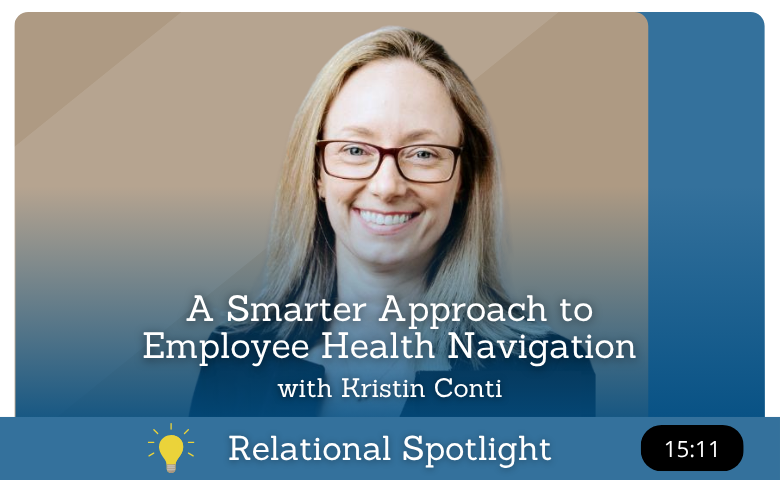

In this episode, Mike Rankin of Relational Advisors sits down with Kristin Conti, Program Director for CareGuides, to unpack how their wellness and care navigation company is helping employees close the gap between where their health is and where they want it to be. Kristin walks through the evolution of CareGuides’ approach — from comprehensive, all-at-once care planning to a more accessible, bite-sized model that starts with biometric screening and follows up with personalized coaching — and explains how this structure catches issues like elevated blood pressure, pre-diabetes, and metabolic syndrome before they become serious. The conversation covers a real case where a routine screening led to a life-changing diagnosis, the difficulty of quantifying prevention as ROI, and why individualized, logistics-based interventions (like fitting a Mediterranean diet into a busy parent’s schedule) succeed where generic advice fails. Throughout, Mike and Kristin emphasize that CareGuides works in support of — not replacement of — a person’s existing care team, filling the accountability and follow-through gap that often derails lasting behavior change.
Clips
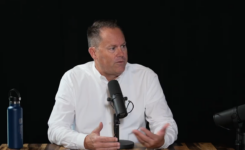
What CareGuides Actually Does
Time: 00:15
Mike and Kristin kick off by defining CareGuides’ mission — closing the gap between where your health is and where you want it to be.
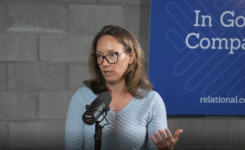
Why 30-Page Health Plans Don’t Work
Time: 01:35
Kristin explains why CareGuides shifted from overwhelming, comprehensive care plans to smaller, more manageable steps — a relatable insight for anyone who’s abandoned a health plan on page two.
Inside a Biometric Screening Session
Time: 03:50
A walkthrough of what actually happens during a 10-minute biometric screening and the follow-up that comes after — useful for anyone curious what to expect.
The Blind Spot Most Wellness Programs Miss
Time: 04:50
Kristin reveals how family history can flag risks that a “normal” lab result would otherwise miss — a surprising and practical insight.
Metabolic Syndrome, Explained With a Traffic Jam
Time: 09:30
Kristin uses a memorable open-road-vs-traffic-jam analogy to explain what metabolic syndrome actually is — one of the most shareable moments in the episode.
The Screening That Prevented a Possible Stroke
Time: 11:20
A real success story: a routine biometric screening uncovered undiagnosed hypertension and a clotting risk in someone who felt completely healthy.
Why Prevention Is So Hard to Put a Price On
Time: 12:35
Mike and Kristin discuss the ROI challenge of wellness programs — how do you quantify a health crisis that never happened?
Skip the Instagram Advice — Get a Real Plan
Time: 13:45
Kristin explains why individualized, clinically-grounded plans succeed where generic internet health advice fails.
Transcript
It’s Mike Rankin with Relational Advisors, and today I have with me Kristin Conti, who’s the Program Director for CareGuides. And CareGuides, as many of you know, is a as a wellness company that Kristin and I started about a year and a half ago, coming up on two years. And since that time, we’ve helped hundreds and hundreds of employees with their health and care navigation and all sorts of great outcomes.
And so I thought it’d be good to just kind of revisit with you, Kristin, and talk about some of those successes and what’s happening in the world of CareGuides. So welcome. Good to see you.
Thank you. Nice to see you too. Absolutely.
So when we look at the kind of the CareGuides, you know, process and initiative of what we do, you know, walk me through a little bit, and we put some slides together that we can look at, but talk me through a little bit of just kind of the process. Like, you know, what is what is CareGuides do and how do you do it? Essentially, what we’re trying to do is figure out how to bridge the gap between whatever health circumstance you’re in, the information you currently have and where you hope to be, whether that’s with your weight, with your lab work, whether it’s you want to feel more awake and less fatigued during the day, you want to have energy to play with your children, whatever that goal may be. We use the data available to help you achieve that goal.
(1:24 – 3:27)
Initially, we started with more complex, comprehensive care planning sessions, right, where we’re looking at everything from your medical intake, right? So what conditions do you have that are known? What kind of medications do you take? Tell me about your sleep, the way you eat, exercise, but it can be very overwhelming to unpack all of those things at once. Right. I think you told me at some point someone and perhaps they did have a fair number of conditions, but it was like a 30-page program and you just, people kind of short out a little bit.
Exactly. So those smaller bite sizes, maybe you get more traction that way. Absolutely.
Yeah, because, you know, while that’s a document that that individual can revisit over time and there is a detailed action plan at the end, I still think it’s a lot of information to take in all at once. And so we’re starting to do things, I think, in more manageable bite size pieces. And one of the ways we do that now is by lowering the barrier of entry into our wellness program by starting with biometric screening.
Yes, that makes sense. And it’s interesting, you know, biometrics and wellness programs have been around for a long time, right? But what I always found is that, you know, somebody goes into the biometric screening, they get their results, and then they’re kind of just left to figure out the information for themselves. I mean, a lot of times there might be coaching available, but it’s hard to access.
It’s kind of been my experience. And so people kind of get just dropped, you know, at that point. We put a couple slides together that we can show and review to kind of walk through that process.
But maybe if you, you know, kind of share that with us, and then, so what happens then? What happens after I get that, you know, that abnormal blood test? Right. So ultimately, what we encourage people to do is for everyone in the company to participate in a biometric screening event. It typically happens over the course of one to two days, depending upon how big the group is.
(3:27 – 15:10)
Each session is 10 minutes long. So you can stop during work and quickly, yes, go in, you see a registered nurse who checks your vital signs, your waist circumference, your weight, and then they also do a finger stick where they check a fasting glucose as well as a lipid panel. After that, we do a 30-minute follow-up.
That way we can talk about the results. So even if they’re perfectly normal, we still give you the opportunity to talk through those things and see if you have any other health goals you’d like to address, or if there’s anything else in your history or your family history that stands out, right? Because there are times whenever you could have a totally normal basic lipid panel, but very pronounced family history of cardiovascular disease, where advanced testing would be indicated if you’d like to stay ahead of it, right? Yeah. And so how do you pick that up from biometric screening? So it looks like it’s normal, but then there’s some other family history.
Is that also included in that questionnaire? Absolutely. So whenever people start the program initially, they actually create an account through Healthy, where they fill out a medical intake form, and that’s the beginning of our encounter. So we review that to start, just to figure out who they are, what they’ve been through up until this point, and that gives Contixt to your results.
And so if you’re looking at, let’s say, 100 people go through and you identify that there’s maybe five or 10, because that’s often how it is in an enrolled population, health insurance-wise. You might have 100 employees, and there’s really 10 or 15 who probably have the most dramatic health issues going on where you can impact that. So then, how do you do the outreach, and then what happens next? Great question.
Yeah, and you’re absolutely right. So if you have a big organization, you don’t necessarily have to spend hours with every single employee. You could have somebody who’s very healthy, maybe they’re a competitive athlete.
All they want to do is hone in their supplements, and that’s a pretty quick conversation. So even a biometric screening allows time for something like that, whereas you also gather data so that you can really hone in on people who are higher risk. Once we have that initial follow-up, then we typically schedule subsequent follow-ups so that we can start to work on health goals in intervals.
So let’s say, for example, that your triglycerides are elevated, your fasting glucose is elevated, so I know that you have some potential underlying metabolic dysfunction. Maybe your bad cholesterol and total cholesterol are also elevated. So instead of trying to change your whole life in a 30-minute conversation, we will come up with a strategic plan based on the information gathered during that encounter, and then have intervals where we follow up that kind of resonate with whatever your care team has going on and currently scheduled, or if you need time to schedule visits, and then we have that.
It’s also like an accountability piece, right? Yeah, absolutely. You can just say, let’s start here. Let’s do this first step.
You’re going to repeat these labs. So there’s really a lot to unpack in what you just said there, and what comes to mind for me, I mean, number one, is that CareGuides is really in support of the existing care team, the primary care physician. We’re not looking to replace that, so we’re in support of it, but I think what we have found is in a lot of cases, there isn’t as much leadership coming from that care team, and so through that follow-up, you and your team can provide that.
I think the other thing that comes to mind is that we’re doing the really, really hard work of changing habits and changing behavior, and that’s not easily done, and I think that’s why those follow-up sessions with accountability is massively important. I know even in my own life, I’ll get a test result, and I’ll have a desire to change things for a day or two, but I know if I have another call coming up in two or three weeks, that I’m going to be pretty darn good during that time period, right? So in support of the existing care team, number one, providing the accountability, the education, and information around that to help them actually change the behavior, and then the other thing that I thought about is we looked at some stats the other day of the encounters that you’ve had, and the percentage of individuals with elevated blood pressure looks like on their way to metabolic syndrome and perhaps insulin resistance. It’s pretty scary, the stats.
I mean, I think it was 60-65% with elevated blood pressure and another 60-65% that were either overweight or obese in those categories. So share maybe, if you can, a little bit about what is metabolic syndrome? We hear about it all the time, but what are we talking about, and why is it so important that we get this addressed within our populations? Right. I want to back up right before I answer that question just to give a little more Contixt, too.
So let’s say that, for example, your A1c is slightly elevated and you’re pre-diabetic. The most common two responses I feel like most people say they receive would be, that’s elevated, let’s monitor it, right? So now you’re waiting another year to follow up. What action is being taken between point A and point B that’s going to move the needle? That’s typically my go-to, right? That’s where I feel like we have the opportunity to intervene.
The other thing that’ll happen is sometimes they’ll say, okay, we’ll eat more of a Mediterranean diet, which is a great recommendation, right? But sometimes people don’t know how to take that information and apply it to their everyday life. What if they’re a super busy professional? They’re trying to manage, you know, two kids and a career, and they’re still trying to exercise and sleep in the meantime, right? Now we’re looking at, like, how can I help you figure out a breakfast that would be suitable? If you don’t have time to cook, maybe you’re going to meal prep, maybe you’re going to boil eggs. And so we basically come up with a logistical plan that they can see in their day-to-day life that now becomes manageable.
Now they are actually eating a Mediterranean diet, and we’re hoping to move the needle in that way. That’s essentially what Care Guides does. And you have a nutritionist on the team that helps with that.
Right. And so if you really want to hone in your nutrition, we can take it to another level with more of a functional medicine approach. Yeah.
And so let’s say that, you know, that particular individual we’re talking about, certainly, you know, the diet change, but going back to, like, metabolic syndrome, what is it and why is it so important that we help people address it? Right. So this is a gross oversimplification, but imagine that your whole body becomes dysregulated in a way. Right.
So let’s say that, theoretically speaking, you have this clear open road. Right. And normally you can get to work on time because you have all green lights and there are no obstructions in your way.
When you have metabolic syndrome, you start to have all of these obstructions and barriers. You start to have traffic that doesn’t move. Maybe a car broke down in front of you.
You start to have an oil spill on the road and other forms of obstruction and debris that are essentially inhibiting your ability to get from one place to another. And the same thing happens essentially within your cardiovascular system and in your metabolic system. Right.
And so the idea behind the lifestyle interventions beyond, you know, medication is allowing all of that stuff to be cleaned out right through maybe doing three HIIT workouts per week to get your heart rate up, doing some resistance training, eating better, cutting back on alcohol, optimizing your sleep so that your body can go through that restorative process where it kind of like rebuilds itself overnight. Yeah. And these are often the things we hear about.
They’re just very difficult to put into practice. But I think what we’re seeing within the population at large is that, you know, we have now a majority of individuals, if they’re not there already, they’re kind of on the, I imagine it as an escalator or a conveyor belt that they’re on their way, you know, eventually. So turning to, let’s say some examples of some successes that you’ve had and your team has had with these, you know, interventions and accountability.
Are there any that come to mind that you want to share would be an example of what, you know, what people might expect? Absolutely. So we had somebody not long ago who thought they were otherwise well, came in to do the biometric screening, and then they were flagged to have an elevated blood pressure. And in the follow-up, we spent a lot of time talking about that as well as some of the other lab results and about why it was so important to establish care with a primary care provider.
And it had been years since this person had seen any healthcare provider. And really I think if it hadn’t been for the biometric screening event still would not have engaged in care. And so shortly after we had our follow-up, they were seen by a primary care doctor, formerly diagnosed with hypertension, started medication and were diagnosed with another condition that also puts them at risk for clotting.
So this easily could have been somebody who has a stroke in their 40s long before they realize that anything is wrong. Right, right. Wow.
And so in that person for their age, certainly it seems maybe on the outside and otherwise that, you know, a picture of health, if you will. But just that one little indication then kind of led to all of these others. And, you know, as an employer looking at that, you think, okay, sometimes the challenge with wellness programs is, you know, what’s the ROI? What’s the return on investment? And it can be difficult to say, well, we believe that we avoided a $100,000, you know, cardiac intervention 12 months from now.
You know, it’s hard to say. But from an employee health standpoint, that person has got to feel way better about, holy smokes, just by doing that one little biometric screening and having a follow up, I was able to avoid a major cardiac event in my life, you know, which is, you know, it’s incredible to do. It must be very rewarding for you, but sometimes it’s hard to see because you’ve prevented something from happening.
It’s hard. You know, how do you quantify that? How do you quantify that? That could have been expensive. Right.
Exactly. Exactly. And it’s amazing to see it provoked this wellness journey for this individual.
Right. I think that’s what happens a lot of times. Even if you don’t formally get a new diagnosis from a biometric screening event, a lot of times that objective data is enough to say, oh, maybe I’m not as well as I think I am.
And something needs to change. Right. Right.
And so really the big key difference between care guides and what you normally get, either from a wellness program or sometimes even your care team is a very individualized plan. Right. We all know what we’re supposed to do.
Right. There’s a tremendous amount of information available on the internet, but trying to figure out what’s going to work for you every day is a very hard task. Right.
And that’s ultimately how you’re facilitating change by meeting them where they’re at and coming up with realistic evidence based interventions that they can apply and see every day in their own life. And that’s what I love about it. It really is independent for the benefit of the individual based on clinical and functional underpinnings as opposed to, you know, getting all the information and advice off of Instagram and TikTok and everything else that comes through.
So that’s awesome. Well, Kristin, thank you very much for your time. I really do appreciate it.