

Podcasts
Benefits Breakdown: Choosing the Right Plans for You and Your Family
Amelia Trujillo and Bryce McLain break down the key terms behind open enrollment and share practical ways to compare plans and save on healthcare costs all year long.

In this episode, Amelia Trujillo is joined by Bryce McLain, both Relationship Managers at Relational Advisors, to break down the key terms and strategies employees need before open enrollment season hits. From premiums and deductibles to coinsurance and out-of-pocket maximums, Amelia and Bryce walk through real plan examples to show how low, medium, and high healthcare utilizers can compare options with confidence. They also cover how to responsibly use AI tools for plan comparisons, plus practical ways to lower costs throughout the plan year — from mail-order prescriptions to HSA and FSA strategies. It’s an essential listen for anyone preparing to make benefits decisions this enrollment season.
Clips
What Your Premium Really Pays For
Time: 1:52
A clear, no-jargon breakdown of what a premium actually is — and why it’s a cost you pay no matter how much (or little) you use your plan.
The One Visit That’s Always Free
Time: 4:32
Viewers learn why preventive visits are covered at 100% under ACA-compliant plans — and why skipping them is leaving free healthcare on the table.
Your Worst-Case-Scenario Number
Time: 8:44
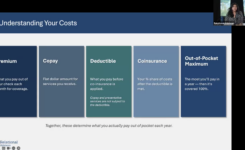
Bryce explains the out-of-pocket maximum — the single most important number for understanding your true financial risk if something catastrophic happens.
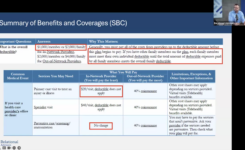
The Deductible Rule Most Families Miss
Time: 13:14
Embedded vs. non-embedded deductibles can make a huge difference for families — this clip untangles a term most people get wrong.
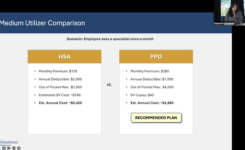
HSA vs. PPO: Which Wins in a Crisis?
Time: 24:39
A real-numbers comparison showing which plan type comes out ahead if you’re hit with a $200,000 medical bill.
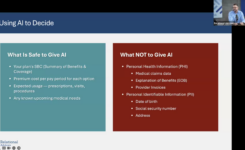
The AI Mistake That Could Expose Your Medical Info
Time: 31:00
Using AI to compare health plans? This clip covers exactly what’s safe to share — and what personal health information you should never type in.
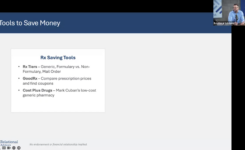
3 Easy Ways to Cut Your Prescription Costs
Time: 37:28
From generics to mail-order to GoodRx, this clip covers simple, actionable ways to lower what you pay at the pharmacy.
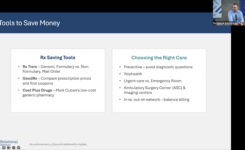
Urgent Care or ER? How to Choose (and Save)
Time: 41:46
A practical gut-check for deciding between urgent care and the ER — and the dramatic cost difference between the two.
Transcript
Amelia Trujillo
(0:03) All right, thank you to everybody that’s joined. (0:05) This is the second webinar in our Work Well, Live Well webinar series. (0:10) I just want to highlight the two coming up.
(0:13) We have one on November 4th with Mike and Sam, finishing the year strong, smart financial moves before the end of the year. (0:20) And then we have one on January 27th of 2027. (0:24) So the first one of the new year with Vanessa and Kristen, New Year Better You.
(0:29) And today I am joined by Bryce McLean. (0:32) My name is Amelia Trujillo. (0:33) We’re both with Relational Advisors.
(0:35) We’re both relationship managers here on the team. (0:38) You may see us at open enrollment. (0:41) And if not, it’s nice to meet you.
(0:44) And we have other people on our team. (0:46) So maybe one of them, you’ve seen them at open enrollment here. (0:50) So at today’s webinar, we’ll be going over three key items.
(0:55) The first one, understanding your benefits. (0:57) So open enrollment’s coming up. (0:59) You’re going to see a lot of terms thrown at you.
(1:01) We want to start in the basics, understanding what each of these terms mean. (1:06) And then once we understand that, we’re going to go into some plan comparison tools so you can make the right decision for you and your family now that open enrollment season’s coming up. (1:17) And then once we are in the plan year, we’re utilizing the plan, how we can lower that healthcare spend when we’re utilizing the plan.
(1:27) So going into that, Bryce, are you ready?
Bryce McLain
(1:32) I am ready and I’m excited. (1:34) I feel like this is so great for everyone on the line because once we hit open enrollment season, everything just kind of seems new. (1:40) We may have not looked at it since the prior year.
(1:42) So I’m glad we’re taking the time to understand.
Amelia Trujillo
(1:44) Yeah, we’re going to kick it off with a few easier terms to, I think, understand and explain. (1:50) So first one up is the premiums. (1:52) Can you please explain what that is for us?
Bryce McLain
(1:54) It’s definitely starting easier with the terminology here with the premium. (1:58) So a premium is really simply put, the amount of money that you have to spend to actually be enrolled in the plan. (2:03) So it doesn’t, it’s not associated with the actual benefits on the plan, but once you pick your plan that’s right for you, there’s going to be a premium associated with it.
(2:11) Whether you’re enrolling yourself or spouse or children, that’s going to vary depending on the plan you’re picking and how many dependents you have. (2:18) But the premium is essentially just that pre-tax amount coming out of your paycheck to be enrolled on the plan. (2:24) It’s a for sure cost.
(2:25) It’s going to the carrier every year, whether you’re using the plan or not.
Amelia Trujillo
(2:28) And where would you typically find that premium?
Bryce McLain
(2:30) Yeah, the premium is going to be listed in your benefit administration system. (2:34) So there’s a whole wide variety of different ones. (2:37) A lot of employers use ADP, Employee Navigator, Paylocity, Paycom, the list goes on, but you’ll see that during open enrollment listed.
(2:44) And one thing you want to be aware of is some employers have what we call a passive enrollment, right? (2:49) Where the plans aren’t changing, the carriers aren’t changing and you think I’m just going to roll over everything staying the same. (2:54) Typically our healthcare costs will go up, right?
(2:56) So unfortunately, yeah, year over year. (2:59) So when we’re looking at, you know, even if the plan staying relatively the same, we still urge employees to go on and look at what the cost may be. (3:07) Because if we see that the cost is going up a little bit for that same plan, maybe you want to look at other options, even though you’re currently happy with that plan.
Amelia Trujillo
(3:14) So premiums, right? (3:15) Typically it’s something that’s a for sure cost that’s coming out of your paycheck, even if we don’t utilize the plan, right? (3:21) So let’s go into a different term, right?
(3:25) Going into the actual benefits of the plan, maybe another easy one. (3:29) What’s the copay?
Bryce McLain
(3:30) Copay. (3:30) Yep. (3:31) Definitely.
(3:31) The second term is also easy. (3:33) Copay is your flat dollar amount for a specific service. (3:36) So if you see copay listed on your benefit summaries or summaries of benefits and coverages, we refer to those as SBCs.
(3:43) Easy to know what the cost is going to be for that particular service because it’s a flat dollar amount. (3:48) So when we see a $20 copay for an office visit, for example, we know that when we go in, we’re sick, we go for our office visit, that copay is going to be $20. (3:57) And then that visit’s covered at 100% after that $20 copay.
(4:00) We’ll also see copays associated with prescriptions. (4:03) So a generic prescription could be a $5, $10 copay. (4:06) And then we’ll see our brand name drug on the formulary list, maybe a $20 copay.
(4:10) So it’s really a known cost, which is nice going into the year. (4:14) If we understand the copays on our plan and we know how many prescriptions or office visits we’re looking at for the next year, then we can kind of do a good job of calculating what our expected costs may be. (4:25) Cause if that’s not going to change, it’s not going to be a variable.
Amelia Trujillo
(4:27) So you mentioned copays for office visits. (4:30) What about preventive visits?
Bryce McLain
(4:32) Preventative visits? (4:33) No, it’s really nice to know that all of our plans that we have offered through us, you know, our employers have what they call affordable care act compliant plans, which basically means that they cover preventative services at a hundred percent. (4:47) So whether it’s going to be a routine physical, a well woman exam and immunization, that’s actually not subject to your copay.
(4:53) So even though you may have a $20 office visit copay, you go in for your preventative visit, that’s going to be covered at a hundred percent. (5:01) So you’ll actually see that listed as no charge or no copay.
Amelia Trujillo
(5:04) So what you’re saying is everybody should be scheduling those preventive visits.
Bryce McLain
(5:07) Yes, exactly. (5:08) It’s much nicer to go in on the front end and have that taken care of one, because it’s no charge to you. (5:13) But also it does help us become healthier individuals so we can, you know, not have big issues come up in the long run.
(5:19) So it’s really what we refer to maybe as a $0 copay, but yeah, preventative would be covered at a hundred percent.
Amelia Trujillo
(5:23) Thank you. (5:24) And then now we’re going into maybe a more complicated definition here, deductible, depending on which plan you’re enrolled in, right? (5:33) It could work a little bit differently, correct?
Bryce McLain
(5:35) That is correct. (5:36) So now that’s becoming a little bit more variable with the deductible, a couple of different things to consider. (5:41) Some plans don’t even have a deductible, some do, and then some have, you know, different services applied to the deductible or not.
(5:49) So a lot of individuals may see a deductible on your plan. (5:52) You may have a thousand dollar deductible and think, okay, I have to satisfy that before I get any benefits. (5:58) That’s not the case.
(5:59) So typically in a traditional PPO, all those copays are going to be before you meet your deductible. (6:05) So if you have that $20 copay for your office visit, that’s going to be available on day one. (6:09) It’s still just $20.
(6:11) We see the deductible come into play is typically more major services. (6:15) So if we have outpatient surgery coming up, if we are admitted to the hospital, you’ll see that listed as, you know, your deductible does apply. (6:24) So in an example, if I have a thousand dollar deductible and I’m hospitalized and the bill’s $2,000, then that first thousand dollars is my responsibility.
(6:34) Once my deductible has been met, then the co-insurance typically kicks in. (6:39) And then that would be, you know, paying a portion of the bill. (6:42) So the deductible is one of the biggest, you know, benefits that individuals look at.
(6:48) But it’s also really important to know the amount of the deductible and how does it apply to my services. (6:53) If I’m just going in for office visits and prescriptions, the deductible is not going to come into play. (6:58) However, if I’m on an HSA plan, everything is subject to that deductible.
(7:03) So there’s a big difference between how that traditional PPO works versus an HSA. (7:07) Besides those preventative visits that we talked about, even on the HSA plan, that’s a $0 cost.
Amelia Trujillo
(7:12) Okay, perfect. (7:13) So we’ve got co-pays and deductibles and co-pays don’t apply to the deductible. (7:19) And then once we’ve met the deductible, what happens?
Bryce McLain
(7:22) Great question. (7:23) So then we have our co-insurance that kicks in and co-insurance is simply explained as the percentage split between the insurance carrier and your responsibility on that bill. (7:33) It’s going to vary across the plan.
(7:35) So you could have a 10% responsibility. (7:37) You know, typically we’ll see a 20%, but you could have a 30% co-insurance. (7:41) So in that example of I have a $1,000 deductible and I had a $2,000 bill from a hospitalization, that first $1,000 we know is my responsibility, but then my co-insurance kicks in.
(7:52) And so the remainder of the bill, that remaining $1,000 would be split between my insurance carrier. (7:58) If I have a 20% co-insurance, that means $200 of that remaining 1,000 is my responsibility. (8:03) And then $800 would be picked up by the insurance carrier.
(8:07) So they’re paying $800 on that claim. (8:09) So $1,200 would ultimately be my responsibility. (8:13) But you know, one important thing is about that deductible.
(8:16) And when the co-insurance kicks in is once you’ve met your deductible, that deductible is met for the year. (8:21) So if you were to have another service come up and outpatient surgery or another hospitalization, your co-insurance is already going to be applied. (8:27) So if you receive another bill for a thousand dollars, your responsibility is 200 and the carrier’s is 800.
Amelia Trujillo
(8:33) Gotcha. (8:34) And so for the co-insurance, do we pay that? (8:37) Let’s say, for example, we got 20% co-insurance split.
(8:39) Do we pay that 20% for the rest of the year after the deductible has been met?
Bryce McLain
(8:44) Great question. (8:44) So that ties in really well with what we call the out-of-pocket maximum. (8:48) So once your deductible has been met, you do keep receiving that co-insurance for those services.
(8:55) But there is basically a worst case scenario. (8:58) And this is probably one of the most important terms to look at when we’re comparing our plans. (9:02) Because we want to know what is our worst case scenario?
(9:05) How much if I have a million dollar medical claim, how much am I going to be paying out-of-pocket in the year? (9:10) Some of us compare plans purely just on that number, right? (9:15) And so when we look at out-of-pocket maximums, that is the most money we would spend out of our pocket in the year before the plan actually switches over to basically 100% coverage, or you have a 0% co-insurance for your responsibility.
(9:28) So if you have a $4,000 out-of-pocket maximum, and you unfortunately have a $200,000 claim, the most you’d spend in coverage would be that $4,000. (9:40) And then the insurance company would pay 100% of the bill.
Amelia Trujillo
(9:43) So the out-of-pocket maximum then is basically your max liability. (9:47) If a catastrophic event, that’s the most that you would pay out-of-pocket.
Bryce McLain
(9:51) Exactly. (9:51) The most that you would have in services that you spend.
Amelia Trujillo
(9:53) And does that amount reset at any point?
Bryce McLain
(9:56) Yeah. (9:56) So typically your deductibles and your out-of-pocket maximums are going to reset at the same time. (10:01) Most of us are on that calendar year is the same as our plan year.
(10:04) So January 1st. (10:06) So, you know, if we have a January 1st effective date, our deductible and out-of-pocket maximums do reset. (10:12) So it’s something to consider where if maybe, you know, there’s a big upcoming surgery and you’ve already met your out-of-pocket maximum, you might want to do that in December and schedule it before they reset in January.
(10:23) Or if you just found out that you need surgery and you haven’t met any of your deductible yet, or you’re out-of-pocket maximum, if it’s not urgent, maybe schedule that for early in the year so that you can hit that early on in the next plan year and be able to see more of a benefit.
Amelia Trujillo
(10:37) So that was a lot of information. (10:39) Those are a lot of terms, but these are a lot of key terms that we’re seeing when, you know, we’re going into open enrollment. (10:44) We’ve got a bunch of summaries up, we’ve got comparison tools up, and all of these terms are going to be coming at us.
(10:51) We kind of now understand what all of these terms mean, but what kind of document would we typically look at when we’re looking at our benefits and seeing these terms?
Bryce McLain
(11:02) Yeah, so the best document, probably one of the most comprehensive documents is going to be what we call, we refer to the SBC for short, but it stands for Summary of Benefits and Coverages. (11:13) Every plan should have one. (11:15) And when you go to look at the SBC, they’re really well organized.
(11:19) So on the left-hand side, you’ll see what specific service you’re interested in. (11:23) Is it for an office visit, a lab, a hospitalization, emergency room? (11:27) In the middle, it’ll show you the coverage, both in and out of network.
(11:31) And then on the right-hand side, it’s going to show any specific notes or things that you want to be aware of. (11:36) Is there prior authorization required for this, right? (11:39) So that is one of the best documents to look at.
(11:42) On page one of the Summaries of Benefits it’s always going to list the key points that everyone wants to know. (11:49) What’s my deductible? (11:50) What’s my out-of-pocket maximum?
(11:51) So for this example, we have an SBC where on page one, it’s showing $1,000 individual deductible. (11:58) Now remember, if you’re covering more people on your plan, that deductible may, it will vary. (12:03) So if I’m covering a spouse, just one dependent or one child or multiple dependents, that’s actually going to move you from the individual deductible to a family deductible.
(12:12) So whether it’s one or multiple, it’s going to be now a family deductible. (12:17) So for this example, my individual deductible is $1,000 and then my family deductible is $2,000. (12:22) And then within that, you’re also going to be able to see what are my co-pays?
(12:25) What’s my coinsurance on the plan? (12:27) So a lot of individuals really just utilize office visit co-pays or prescription co-pays. (12:33) And that’s going to list on, under office visit co-pay, we see it’s a $20 visit and then explicitly list deductible does not apply.
(12:41) So if you’re curious, does my deductible apply or not? (12:44) If it’s not listed, most likely it applies. (12:47) So it’ll explicitly say deductible does not apply.
(12:50) And then here we see it’s a $40 office visit for a specialist and then down for those preventative visits that we discussed, it’s showing no charge. (12:57) So you’ll be able to see that it’s no cost to you for that.
Amelia Trujillo
(13:00) So I see here are the family coverage, right? (13:02) It says $2,000 for family. (13:04) So that’s if I’m enrolled in with one or more dependents right on the plan.
(13:08) So does this mean that each individual in my family needs to meet that $2,000 deductible? (13:13) How does that work?
Bryce McLain
(13:14) Yeah, that’s a great question. (13:15) It’s actually one of the more nuanced terms that we didn’t cover on the previous slide, but it’s a really good one to know. (13:21) That’s when we jump into whether that deductible is what we call embedded or non-embedded.
(13:27) And that’s a great question to ask during your open enrollment meetings or looking at your summary of benefits and coverages to find that because it does list it. (13:35) So on this plan, we can see this is actually an embedded deductible. (13:38) So it lists that each family member must meet their own individual deductible, right?
(13:44) Until the total of the deductible expenses paid by all family members meets the overall family deductible. (13:50) A lot of words, but essentially what this means is that every individual is only responsible for your $1,000 deductible. (13:57) So as an individual, if I have a thousand dollars worth of expenses, even though I’m covering a spouse and our family is $2,000 deductible, I’m only responsible for my $1,000.
(14:07) My co-insurance kicks in, but my spouse would still have to meet their deductible. (14:11) If we have what we call the non-embedded deductible, that would mean that if I’m covering myself, a spouse and a child, we would all be subject to that $2,000 deductible. (14:22) But once it’s met, it’s met for everybody.
(14:24) So if I have a thousand dollars, spouse has a 500 and my child has $500 towards that deductible, cumulatively it’s $2,000 and then it’s met for all of us.
Amelia Trujillo
(14:32) So non-embedded is when one person can meet that full deductible, that full family deductible.
Bryce McLain
(14:38) Yes, exactly.
Amelia Trujillo
(14:39) So all that information’s well and good, right? (14:42) But what if my employer only offers the one plan, then that’s the only option I have, correct? (14:47) I mean, why bother even doing comparisons when I’ve only got one plan option?
Bryce McLain
(14:51) Yeah, so that’s a great question. (14:53) That’s something that we always like to highlight during the open enrollment period is that you’re using it as more of a financial exercise, right? (15:00) And so we think, okay, I’ve been enrolled in this plan for a while.
(15:04) We offer one plan and I don’t really look elsewhere for what other coverages may be available to me. (15:10) But a lot of individuals are in a certain situation where you may have other plan options. (15:14) So you want to take kind of all those terms we reviewed and compare it to some other coverages that may be out there.
(15:21) So one big one is Medicare. (15:23) Individuals that are approaching the age of 65 should start being more educated in Medicare to see if it’s a good option. (15:29) We could do a whole webinar on Medicare, but luckily we actually set one up.
Amelia Trujillo
(15:34) Yeah. (15:34) So here on the screen is a QR code because we actually have a Medicare webinar on October 7th because like Bryce mentioned, there’s so many different components for Medicare that it takes up a whole webinar in itself. (15:47) So if you are interested in that webinar, feel free to scan the QR code now and then join us on October 7th for that.
(15:55) So what other options would somebody else have?
Bryce McLain
(15:57) Yeah. (15:57) So Medicare, it’s kind of a no-brainer. (16:00) If we’re kind of towards the age 65, then we should definitely be looking at it because especially we’ll learn more in the next webinar that we have.
(16:08) But you may be in the bucket where, okay, I’m not approaching age 65, I’m not qualifying for Medicare, but your spouse may be with their employer have options available to them. (16:17) So you can always look at what is available through my spouse, both from a premium standpoint, how much does it cost to join their plan or have them join my plan? (16:27) You can look at the networks available.
(16:29) Do I like the doctors in my spouse’s plan or vice versa? (16:32) So really when we think that, okay, there may be one plan through my employer, you’re looking at, okay, your spouse may have two or three plans. (16:39) And then when we think about how the deductibles work, maybe your covering children, but you’re covering yourself, but it may make sense to all be on one plan because then you’ll hit your deductible faster because you have a non-embedded deductible, right?
(16:53) So these are some of the questions that we don’t really dive into unless we’re in open enrollment and then we forget to ask them. (17:00) And then we feel like maybe not as confident with our decision. (17:04) So I think looking at those different options that may be out there is appropriate.
(17:08) And then the last one would be, you know, if we’re new to the workforce or we’re still just under the age of 26, we may be covered on our parents’ plan, right? (17:16) Hopefully maybe they’re paying for us.
Amelia Trujillo
(17:17) So we should just stay on that.
Bryce McLain
(17:18) Just stay on it, right? (17:19) That’s kind of the default button, right? (17:21) Just the easy button renew.
(17:22) But, you know, maybe you have a specialist that you see and your parents make you pay out of pocket for it. (17:27) And that copay is twice as much as on your parents’ plan. (17:31) And when you do the math, it’s cheaper for me to be on my employer’s plan from paycheck perspective.
(17:37) And I have lower copays, right? (17:39) So really just looking at it holistically as far as there may be other options available to us. (17:44) And then we’re also becoming a smarter consumer because we’re not going to be on the parents’ plan forever.
(17:49) So it’s kind of forcing us to look at our employer’s plan. (17:52) It may not be the best fit today, but that’s not, you know, the case for next year. (17:55) And so especially if you’re on this webinar, learning the terms and learning how the plans work, you’re definitely putting yourself in a good situation to continue to use that open enrollment as a financial exercise and get familiar because one day you will have to, you know, eventually join your own plan.
Amelia Trujillo
(18:11) So maybe I don’t just have one option available to me, right? (18:14) So again, maybe Medicare is an option, spouse’s plan, or maybe staying on your parents’ plan. (18:19) But we would know the key terms now.
(18:22) We know kind of what document to look at. (18:25) We know that we have other plan options available to us, but let’s say we’ve narrowed it down to two plans, right? (18:30) We’ve got, we’ve narrowed it down.
(18:32) We want to compare these two plans. (18:35) What do we typically look at when we’re looking at these two plans to make our final decision here at open enrollment?
Bryce McLain
(18:41) Yeah. (18:41) So, you know, it’s, it’s kind of funny because usually there’s some really quick decisions made right at the beginning. (18:48) I know I don’t want the HMO, or I know I don’t want the HSA or you can pare it down pretty quickly.
(18:53) I don’t want this deductible. (18:54) You may have one or two options available to you. (18:57) You may have six.
(18:58) I know employers that have, you know, 10 or more. (19:01) So sometimes it’s easier to whittle it down, but what you’ll find yourself doing is you’ll come to one or two options, maybe three, and they’ll look pretty similar, either from a per paycheck perspective, or the deductibles look pretty similar. (19:16) And you’re just, well, which one’s going to be the best fit.
(19:18) And really what we want to do is feel confident going into the next year with, with making that decision. (19:22) So, you know, one of the biggest things is premium, right? (19:25) As we know, that’s going to be for sure.
(19:27) That’s just coming out of a paycheck, no matter what, no matter what, whether we use the plan or not, it’s going to be premiums. (19:32) That’s a quick way to, to look at the two different plans. (19:34) But when we’re speaking about medical coverage, it’s really a balancing act between premiums and, and the benefits.
(19:42) Typically, we see richer benefits applied, have a higher premium associated with it. (19:48) And so a lot of individuals will gravitate towards a plan that is more expensive, whether they think they’re going to use the plan or not, because they’re more risk averse, right? (19:58) And they think, well, whether I use the plan or not, I’m going to pick the most expensive one, because at the end of the day, I’ll be covered, you know, in a catastrophic event, right?
(20:06) But what we see that that’s not always the case. (20:08) So you’re going to want to look at your out of pocket maximums between those two plans. (20:12) So in this example, the most catastrophic event that HSA plan as $125 a month premium, and that the out of pocket maximum is $3,500.
(20:21) Our PPO, though, the deductibles lower, and we have co pays on day one, which is really nice, our premiums $200. (20:27) So when we look at that example, and that million dollar event, you know, maybe that HSA would be a better option. (20:33) So we’re really looking at both of those, right?
Amelia Trujillo
(20:35) Because the out of pocket max, again, is your total liability if something catastrophic were to happen, right?
Bryce McLain
(20:41) Exactly. (20:41) So it’s really your worst case scenario.
Amelia Trujillo
(20:43) Okay, so let’s say, right, we want to jump into different kind of utilizers of the plan, right, low, medium and high. (20:51) So let’s say for an example, an employee is only doing preventive visits. (20:57) What would that look like?
(20:58) How would we compare the two plans? (21:00) They’re not going to any specialist visits, they don’t have any ongoing prescriptions. (21:04) How would these two plans compare for that individual?
Bryce McLain
(21:07) Yeah, great question. (21:08) It’s a great exercise, right? (21:09) Because we can we can kind of look at our prior history and say, I’m, I believe I’m healthier, we don’t, we can’t predict the future, we don’t know if we’re going to get unhealthy or not.
(21:16) But over the past couple years, all I’ve done is my preventative visit, or maybe I had a generic prescription that costs $5. (21:22) Right. (21:22) So, well, one thing we can do is we can look at, you know, if we’re talking purely an individual that is on the healthier side, or a lower utilizer, we can compare two things.
(21:32) So it’s really going to be what we expect to pay. (21:35) And so if we’re going for preventative visits, then we’re expecting zero for those. (21:39) And then maybe one or two things come up in the year.
(21:42) But the biggest cost for us if we’re a low or no utilizer is going to be that premium. (21:46) So we’re going to want to look at how much does it cost to be on plan A versus plan B. (21:50) So if we looked at the HSA example, it’s $125 a month to be on that plan.
(21:56) And we times that by 12, it’s going to be $1,500. (21:59) If we’re going in for our routine physicals, or well women exams, that’s going to be no cost to us. (22:04) So at the end of the year, out the door, we’re not getting it back, we’re paying $1,500.
(22:08) On the traditional PPO that we saw, it’s a $200 a month premium. (22:12) And that’s going to be roughly $2,400 in the year. (22:15) Now these premiums are going to vary depending on if I’m covering, you know, dependent or not.
(22:19) But if we’re just looking at the individual, in a clear cut, you know, if we are very healthy, don’t have a lot of services, it’s going to be about a $900 savings that we’re going to keep in our pocket being on that HSA versus the traditional PPO. (22:33) And then even if we were to have under $900 worth of expenses, then we’re still up in the year, right? (22:38) Maybe we did have an office visit that costs $100.
(22:41) We need some antibiotics. (22:44) But so if that total is less than the $900, then we’re still going to say that that HSA plan is the one to go with.
Amelia Trujillo
(22:51) Perfect. (22:51) So let’s say maybe I have to go to a specialist once a month. (22:55) I know that for sure.
(22:57) We are going to have some of those office visits. (23:00) What does that look like under these two plans?
Bryce McLain
(23:03) Yeah, so we’re kind of getting into the range of the middle utilizer, right? (23:07) Maybe we know that there’s some things going on. (23:09) We once again, can’t predict if we’re going to get sick.
(23:12) But then we’re going to look at a couple different things, right? (23:15) So we’re going to consider the premium always. (23:17) So we’re still going to say we still have the $125 premium.
(23:21) But then under the HSA plan, one of the things is that we mentioned all those services are subject to that deductible. (23:27) So it will vary depending on which provider you go to.
Amelia Trujillo
(23:32) Say for my specialist, it’d be $160 per visit.
Bryce McLain
(23:35) Yeah, that’s pretty standard for a specialist visit under that HSA arrangement. (23:40) So if we’re going once a month, and we look at about $160 per visit, and we add that on to our premium, we could roughly, you know, look at spending $3,420 in the year. (23:52) The great thing about that traditional PPO, when we talked about co-pays, that flat dollar amount, it’s a lot easier to know what that cost is going to be.
(24:00) Because we know under that PPO plan, the traditional PPO, it’s a $40 co-pay, right? (24:05) So when we add the $2,400 of overall premium costs, plus going once a month to a specialist with a $40 co-pay, that overall cost is actually $2,880. (24:16) So for that middle utilizer, it’s probably the hardest one to project when we’re looking at different plans.
(24:22) But if we were in the middle utilizer between these two plans, the PPO is going to be the route we would want to take, right?
Amelia Trujillo
(24:29) And now last but not least, we want to look at what happens if we have a catastrophic event, right? (24:35) We got a $200,000 claim. (24:38) What does that look like?
Bryce McLain
(24:39) Yes. (24:39) And that one, you know, fortunately, I mean, unfortunately, if you were to have a catastrophic claim, you have high claims costs, high medical bills. (24:46) But the fortunate thing is that one’s easier to predict because really that equation is just going to be looking at the overall premium in the year, and then what my out-of-pocket maximum is.
(24:56) So when we look at that HSA plan, it’s $125 per month, once again, $1,500 in premium for the year. (25:03) And then we just simply add that to what our total liability, that $3,500 out-of-pocket maximum.
Amelia Trujillo
(25:08) Because we don’t pay anything after we’ve met the out-of-pocket max, right? (25:12) It’s covered at 100% in-network.
Bryce McLain
(25:14) 100% in-network. (25:15) So once we know that that’s a for-sure cost, $3,500. (25:19) So when we add those two together, we get $5,000 on that HSA plan.
(25:23) With the traditional PPO, we have actually a higher out-of-pocket maximum. (25:28) So it’s a $4,000 out-of-pocket maximum. (25:31) And then when we add in what the premium cost would be on that plan, which would be $2,400, then at the end of the year, we’re at $6,400.
(25:39) So, you know, it’s a lot easier to predict if I had a catastrophic year, what plan is going to be better? (25:45) Because that’s a simple calculation. (25:47) It’s going to be that, once again, that premium plus my out-of-pocket maximum.
(25:51) In this scenario, it’s a $1,400 benefit to stay on that HSA. (25:56) Now, you know, this is pretty clear cut, you know, pretty easy numbers to use. (26:02) These are actual real plans that we looked at.
(26:04) So they aren’t made up numbers, but the truth of the matter is everyone’s plans are going to be different. (26:10) Those out-of-pocket maximums are going to vary. (26:13) So sometimes it’s not going to be as clear cut for you when you’re looking at it.
(26:17) Sometimes it’ll jump right off the page because I know I’m a low utilizer, or the only question I have is I want to know what my worst case scenario is. (26:25) But when you go down that route, that’s when they reach out to us, right? (26:29) And it kind of helped with that.
Amelia Trujillo
(26:30) So we’re looking at premiums, right? (26:33) Deductibles, out-of-pocket maximums to do these comparisons ourselves at here, like our upcoming open enrollments. (26:42) Where can we find all of this information so that we can do these comparisons ourselves at open enrollment?
Bryce McLain
(26:48) Yes, yes. (26:49) So there’s going to be maybe too much information that’s thrown at you all at once. (26:53) And it’s just, you know, where do I go to find this information?
(26:56) We like to over-communicate than under. (26:59) But the best thing is there’s a lot of documents out there. (27:02) There’s a lot of places that those documents are posted.
(27:04) There’s a lot of mobile apps, websites, and everything that you can look into. (27:08) So when we look at some of the best places to get some of this information is going to be, number one, your benefit administration system. (27:16) That’s really great because, you know, it’s going to be not just your medical plans, but basically every plan you have offered to you.
(27:23) And that’s going to be whether you’re using employee navigator, the ADPs, the paycoms, all that information will be housed in your benefit administration system. (27:33) And it’s also a great place to go to get a refresher on what you’re currently enrolled in because that information will be available throughout the year. (27:39) So during open enrollment, you can compare your current plan to the new potential plans for the next year.
(27:45) But it’s also great throughout the year to go back to that resource. (27:49) And then another one is going to be on the carriers site or mobile app. (27:54) Every, you know, large carrier has their own mobile app, but you can also log in and online.
(27:59) Now, this is great, especially for your current plan to find what am I paying currently for co-pays and co-insurance, what’s my deductible, because that will be housed in the platform. (28:09) Throughout the year, you can log in as a guest and search for providers. (28:13) But when you actually set up your login with the carriers, there’s so much more available to you.
(28:19) You can find out, you know, what pharmacies are in network, what urgent carers are in network by your specific plan and pull up your ID card because I get questions all the time. (28:27) I didn’t receive my ID card or, you know, it was lost in the mail or I threw it away. (28:30) Can I get a new one?
Amelia Trujillo
(28:31) That’s always a recommendation. (28:33) Download and register the apps because like Bryce mentioned, you have access to your benefits in a network providers, copy of your ID cards. (28:41) If you do have an office visit, you can get your explanation of benefits or your EOBs to see how those claims are processed, if it was applied to your deductible and so forth.
(28:51) So I highly recommend downloading, registering those apps, not just for medical for dental and vision as well, right?
Bryce McLain
(28:57) Correct.
Amelia Trujillo
(28:57) You still have claims for that.
Bryce McLain
(28:58) Yeah, exactly. (28:59) And then you can access your information for your medical or your dental ID to those apps. (29:06) The company’s benefit guide, that’s a great resource.
(29:08) Once again, those SBCs are going to be very detailed, a lot of information on there. (29:12) But especially if we’re on this webinar now, we kind of know what those terms mean. (29:16) If we look at our benefit guide, we’ll have side-by-side comparisons of what our plans are, what’s the deductible, what’s the out-of-pocket maximum listed out pretty clearly.
(29:24) We like to highlight the most utilized services that we see in those benefit guides. (29:28) And if you don’t find it there, that’s when we go to our summaries of benefits and coverages. (29:33) But in addition to that, they also have a contacts page.
(29:36) So, you know, if I need to know where my website is for my medical carrier or my dental and vision carrier, what’s my broker’s contact, right? (29:44) So, you know, my information, your information we know is listed in that guide. (29:48) They can call us directly, phone numbers, email addresses.
(29:50) So, look in the benefit guide. (29:51) You’ll either find the information or have that reference point to know where to reach out to, to get more information.
Bryce McLain
(29:58) And then lastly, request copies from HR. (30:03) So, you know, everyone should have that on file, those SBCs, our benefit guides. (30:07) If for some reason you misplaced it or you haven’t seen it, you can’t find it on the website, always reach out to HR or your advisor, you know, one of us, and we’ll be more than happy to supply that to you.
Amelia Trujillo
(30:17) So again, a lot of information, but now hopefully, right, we understand the terms, we know where to find it to be able to compare ourselves. (30:25) But what if I don’t want to do the comparison myself, I don’t want to put those charts together. (30:29) Like, is there anything else you recommend?
(30:32) So I don’t have to do the hard work.
Bryce McLain
(30:33) Yeah, I mean, always, you know, reaching out to us asking those questions. (30:36) So because we look at this stuff day in and day out, right. (30:39) So some of this stuff is still going to be feeling a little new to us as we go into into open enrollment, even though we’re doing this great breakdown.
(30:47) But one thing that we have seen not just in the benefits world, but just around the workplace in general is leveraging AI for a lot of that decision making. (30:54) So one thing that we that I’ve been seeing is a lot of employees putting in questions.
Amelia Trujillo
(31:00) And I got an email the other day, like, hey, I asked me to ask you this. (31:04) Oh, okay, this is a first, but I’m sure we’re gonna be seeing a lot more.
Bryce McLain
(31:09) Right. (31:09) And so one thing that we can do is just be a little bit cautious when we’re using our AI. (31:15) So using AI isn’t bad, right?
Amelia Trujillo
(31:17) We can just throw everything in there, right?
Bryce McLain
(31:19) We’ll throw everything in there. (31:21) So, you know, we can throw in a lot of good information, and it’s going to need a lot of information to give us appropriate responses, right? (31:30) It’s only good information going in is going to help with good, better information coming out.
(31:34) So some things that we can put in there definitely drop in a lot of, you know, Claw, ChatGPT, they’ll allow you to upload those documents, those SBCs that you can put in there. (31:44) So so supply it with the actual benefit plan designs, you can put in what network you’re in, maybe. (31:51) And then you’re also going to want to supply it with your premiums, right?
(31:54) Because when you put in a question into an AI platform, and you say, I have a surgery coming up next year, which plan between A and B is going to be better for me? (32:05) Well, they’ll probably just tell you the one that has the richest benefit. (32:08) But they’re not taking into consideration the premium.
(32:10) So even though you’re maybe overpaying for that plan, they don’t know that, yeah, it’s a richer benefit, but then you’re actually going to be out of pocket more because you could have spent, you know, some money that you save on premium to go towards it. (32:22) So those are great things to put in there, your benefit summaries, your premiums, maybe how big your family is. (32:27) So it knows if you’re covering just yourself or dependents, is that deductible apply at a family level or an individual level.
(32:34) But there’s some big doubts. (32:35) And really, when we look at AI, a lot of individuals like to ask it questions and send information in, but we get a little too carried away, and we might be sending in our personal information. (32:45) So we really want to make sure that you’re not putting in any personal health information, what we refer to as PHI, that’s going to be your diagnosis, your prescriptions that you’re on, you know, certain medical conditions that you have.
(32:59) Because that once you put it into the internet, those aren’t really closed systems, it’s out there, right? (33:03) Security breaches all the time, it’s something that we have to be become a little bit more educated in making sure that we’re not giving inappropriate information to these tools. (33:11) And then one is also personal identifiable information.
Amelia Trujillo
(33:15) And that could just be my address, my phone number, you know, my date of birth, my social, I’m not going to enter that information, maybe I’ll just upload, you know, my explanation of benefits in there to see how a claim was processed.
Bryce McLain
(33:26) Yeah. (33:27) And so I’m sure we see those explanation of benefits, or maybe a large invoice, and it’s a couple pages long, and we don’t read through the whole thing. (33:34) But maybe buried in there is, you know, your date of service, your birth date, you know, maybe the last four digits of your social, some information that we don’t want to put into AI.
(33:43) So, so once again, when we drop in the information, even those documents that we’re putting in, we may feel are harmless, but we want to make sure we’re not putting a document in that may have some of that information as well, because it could extract that.
Amelia Trujillo
(33:56) Okay, so I, okay, I’ll find I’ll just upload my SBCs, right? (34:00) And I’ll just ask it to compare the plans and then they’ll spit out whatever, whatever I want.
Bryce McLain
(34:05) Yeah, yeah. (34:06) And that’s, you know, that’s the thing where, once again, better information in is better information out. (34:11) So when we look at, you know, AI, they use the term prompt engineering, or making sure that you’re giving it the appropriate prompt.
(34:17) So I like to kind of go back to when we were talking earlier about I’m a low, medium or high utilizer, you can put in specific information, just not give it that that PHI, you can say I have a prescription that I take once a month, and you can give it the it’s a brand name on the formulary. (34:34) So I know it’s a $40, $40 copay, what would that look like between these two plans? (34:40) Maybe I have a family, so I’m under the family deductible, but I’m expecting surgery next week or next year.
(34:46) Can we compare that so you can give it some specific examples of what you want it to look like I’m expecting my first child. (34:52) But you can also run down the rabbit hole of some, some unknown. (34:57) So when you’re kind of going through that exercise, you can give it a little bit of information around this is my current state.
(35:02) You know, I’m a low utilizer. (35:05) And then you may have a pretty good idea of what plan you want to you want to see or want to enroll in, and have it make a chart for you, right? (35:12) Take in consideration, the premium taken consideration, I’m under a deductible with a family.
(35:17) And then once you have that answer, then go down another rabbit hole of what if this were to happen, it’s really going to be depending on the user. (35:24) But a lot of people are curious where I know this is my current situation, but I don’t know if I’m going to get sick or not, right. (35:30) So that’s going to be where you say maybe, maybe I get hurt, I have to have a surgery or I get diagnosed with something and I have to have an ongoing prescription.
(35:40) And then you could also give it the last final in a worst case scenario, what’s my out of pocket, you know, and my, my premiums put together.
Amelia Trujillo
(35:47) So we don’t necessarily need to use AI, there’s a bunch of other comparison tools, right? (35:51) Sometimes your Ben admin system in itself has comparison tools side by side there. (35:57) Again, you can reach out to your advisor if you need assistance picking the right plan for you.
(36:01) But again, like Bryce mentioned, it really depends right on your personal situation. (36:06) So we can give you best guess of maybe what the plan looks like for you. (36:12) But right, so we’ve opened enrollment, we’ve made our decision, right, we feel confident in what each of these terms mean.
(36:18) Now we’re in the plan year, we’re utilizing the plan, how can we save some money throughout the plan year?
Bryce McLain
(36:25) Yeah. (36:25) And so you know, if you’ve gone through the steps that we already talked about, it definitely doesn’t take, you know, 10 minutes to do all of that to do the plan comparisons and the premiums comparison. (36:34) But if you take a little bit of time, you’ll be able to feel pretty confident going into that year with the plan you selected.
(36:40) But now how do I use it, right? (36:42) Whether you you for sure pick the perfect plan for you or not. (36:46) There’s no perfect plan out there.
(36:48) How can we lower costs? (36:50) So a couple of things, you know, there’s so much out there. (36:53) And if you ever have questions on specific services, how can I lower my costs on certain things, you can always reach out to us because we’d love to be your advocate.
(37:02) If you receive a bill in the mail, and it’s maybe higher than you thought, you can always reach out to us and say, okay, was this process correctly? (37:09) That’s kind of on the back end. (37:11) So what we want to do is be smarter consumers on the front end.
(37:15) And how do we lower our costs before we have a bill that’s too high that we were unexpecting. (37:21) So one of the biggest drivers of healthcare costs that we see go up, you know, higher and higher is going to be prescriptions. (37:29) Those are those are just ramping up with with all the different drugs that are coming out are very expensive.
(37:35) So how do we save on our prescription costs?
Amelia Trujillo
(37:37) Yeah, because when I go to the doctor, they prescribe me medication, and I’m like, okay, go to the pharmacy, pick it up. (37:42) Yeah, go on about my day.
Bryce McLain
(37:43) My doctor knows exactly what’s right for me. (37:45) And so it’s they don’t, but don’t be untrusting of your doctor, right? (37:48) But but they don’t, it’s not their priority to make sure that the prescription they’re giving you is the best costly, best cost prescription on your plan.
(37:58) They may not look up if there’s a generic equivalent, right? (38:01) So generics are going to be the most inexpensive drugs that we can get that we’re taking. (38:05) And the co pays are going to be a lot lower.
(38:07) So one thing we can do is we can ask our doctor to give us a generic equivalent or even ask the pharmacist when we’re picking up our prescription. (38:14) Is there a generic equivalent for this that I can take? (38:17) In addition to that, if you get a brand name drug, make sure it’s on the formulary list.
(38:20) That’s really the what they call the preferred drug list, the formulary list. (38:24) And those copays are going to be a lot lower than if that brand name drug was not on the formulary list. (38:29) And then one last thing when we’re running through our plan is mail order prescriptions, right?
(38:34) So we can get if we have ongoing prescriptions, we can get a 90 day supply for typically two times a copay, sometimes two and a half, depending on that plan set up. (38:43) And it’s set right to my door, right? (38:45) Don’t need to wait in line at the pharmacy.
(38:47) Don’t need to wait in line at the pharmacy, which I’m sure most of us don’t like doing. (38:50) So if we if our prescription is on the mail order list, then we can get those shipped to us. (38:55) And we’re just that’s a clear cut way to save cost.
(38:58) And it’s more convenient, right? (38:59) So some of these things are even more convenient to us. (39:01) Other other avenues that we see in the prescription space is that there’s there’s other companies out there that are helping individuals save on their prescriptions.
(39:11) Once GoodRx, Mark Cuban has cost plus drugs, right? (39:14) And that’s essentially, you know, especially GoodRx free program. (39:19) You set up a profile and then you’re able to access some of those prescriptions for a much lower cost, even though it’s the same exact drug, then then going through the actual normal process.
Amelia Trujillo
(39:29) Is that run through our plan?
Bryce McLain
(39:30) That’s the one caveat there that you want to be aware of. (39:33) So, you know, with our our normal going to the pharmacy, not going through costs, cost plus or GoodRx, those those prescriptions that would not go through our insurance through cost plus or GoodRx, which means it’s not applied to our deductible or it’s not applied to out of pocket maximum. (39:50) So that’s something that we want to be aware of, that even though we’re getting a discount on the actual prescription, it’s running outside of that plan.
(39:57) So it’s not going to be applied to that.
Amelia Trujillo
(39:59) But I could be saving a good amount of money, right? (40:01) If I go outside. (40:02) So it’s just a financial exercise, once again, determining which one which way is better for myself and my family.
(40:09) Okay.
Bryce McLain
(40:10) And then, you know, outside of prescriptions, we see a lot of individuals that run into a specific situation with their preventative services. (40:19) So we always say go in and get your preventative services. (40:22) Coverage is 100% of cost to you.
Amelia Trujillo
(40:24) When I’m at the doctor, right? (40:26) I’m going for my preventive visit, my shoulders hurting during that visit, like what, what then?
Bryce McLain
(40:33) Yeah, they may ask you questions. (40:34) Is anything else bothering you? (40:36) Is there anything you want to review today?
(40:37) You’re going to want to ask them, does this still fall under my preventative visit covered at 100%? (40:42) Because if they start doing more of a diagnostic appointment, then they’re going to code that differently, they’re going to switch it from your preventative. (40:49) And depending on what’s bothering you, maybe your shoulder just because you slept on it wrong, it actually wasn’t bothering you that much.
(40:54) But too late, we’re doing all these tests, then they’re going to order another test. (40:57) And now we’re no longer in that preventative space. (41:00) We’re now in a diagnostic arrangement.
(41:02) And so now we’re going to receive a bill. (41:03) And you go, well, I just went in for my physical, but why do I have I have this bill. (41:07) So that’s something that we want to just be smart consumers on.
(41:10) Definitely go in and do your preventative visit. (41:12) But but be, you know, feel free to ask your provider, is this still going to be built? (41:17) Or is this still covered as one of the parts of my routine physical, telehealth, and another amazing benefit, sometimes it’s no copay, right, we see a lot of telehealth with with no copay or low copay.
(41:29) That’s great for when you’re traveling as well. (41:31) And they can actually write you a prescription. (41:33) So kind of in the same realm of the also the convenience factor of not having to go to a provider, right with our with our mail order prescriptions, just with our telehealth, you can get prescriptions, you know, prescribed to you, drugs prescribed to you.
(41:46) And then you also don’t have to go, you know, make an appointment, find someone to watch the kids and all of that. (41:52) So that’s just a nice way to save some money. (41:55) One of the biggest ones, urgent care versus emergency room, right, right, I got an earache, I’m going straight to the emergency room to the ER, as we probably can assume ER costs are astronomical.
(42:08) So when we compare that to an urgent care could have a low 35 $50 copay for urgent care visit, right, maybe $40 to look at that. (42:16) So if it’s not a true emergency, use your best judgment, we’re not we’re not doctors, right? (42:21) We don’t want to, you know, not go to the emergency room if we have to, but use your best judgment.
(42:27) And can I go to the urgent care? (42:29) And will I be able to save a lot more money doing that versus Do I really know to need to go to the ER?
Amelia Trujillo
(42:34) And one thing I do like to highlight as well as right, because you never know when there’s going to be an emergency when you’re going to need an urgent care. (42:41) So when you’re enrolled in the plan, look at the network providers, facilities, urgent cares, right in your area that are in network. (42:49) So when you do need to go to one, you’re not kind of scrambling and looking for one that’s in network, you know, which one’s closest to you, right?
Bryce McLain
(42:56) Yeah, exactly. (42:57) I mean, for pharmacies, urgent cares, you know, a lot of individuals, I don’t know why, but a lot of individuals do think that all urgent cares are considered a network, right? (43:07) And that’s not the case.
(43:08) So So knowing where the urgent care is, and then also, you know, know, what’s my telehealth number? (43:14) You know, what can I see that in my phone and just pull that up, especially if I’m going to go on a trip. (43:18) So yeah, knowing that information before you’re scrambling is definitely a smart some good saving tools here.
Amelia Trujillo
(43:25) But earlier, you also mentioned the HSA plans, right? (43:28) And that’s the medical portion, but we didn’t quite go into the savings aspect of that. (43:34) Can we go into that a bit?
Bryce McLain
(43:35) Yeah, yeah. (43:36) So with the with the HSA, and you may also have an FSA available to you, there’s definitely some rules around it. (43:43) Can you be in an HSA health savings account?
(43:46) Now, there’s two different things. (43:47) Once again, as you mentioned, there’s the plan, and then there’s the underlying or the underlying plan, and then there’s the health savings account portion of it. (43:55) So if we’re trying to lower our costs throughout the year, one thing we can do is contribute to a health savings account.
(44:01) What that will do is lower our taxable income because those contributions come out on a pre tax basis. (44:05) Sometimes you have an employer contribution as well. (44:08) And we can spend pre tax dollars on eligible expenses versus post tax dollars.
(44:13) So if I know I’m going to have to go for that once a month specialist visit, and it roughly costs $160, then that’s the money I should be putting into my HSA. (44:23) And now I’m paying for on a pre tax basis. (44:25) You know, another great thing about the HSA is is that they have their own list of what’s a qualified expense or not.
Amelia Trujillo
(44:32) So even if it’s not covered under your medical plan, you can still use your HSA funds for dental and vision or dental and vision, because I don’t think our plan covers orthodontia, but I think I want to get Invisalign. (44:44) So I think that’s also on the list for eligible expenses.
Bryce McLain
(44:47) Exactly. (44:48) Right. (44:48) So if you want if it’s not covered under that dental revision plan as well, you know, because that HSA can be used for all three medical dental vision, then you can use your HSA funds for Invisalign even though it’s not running through the plan.
(45:00) Right. (45:01) So that’s another great way to save money throughout the year. (45:04) And then lastly, the flexible spending account, right?
(45:07) It works very differently than the HSA, because, you know, we don’t have to be enrolled in the HSA to do that FSA. (45:13) A lot of employers where you don’t even have to be enrolled in the medical plan to that FSA could be if you just want to use it for dental and vision. (45:19) So FSA works very similar pre tax dollars coming out.
(45:23) You can use it for medical, dental and vision expenses. (45:27) But what the biggest thing is that those funds are going to be front loaded. (45:33) Right.
(45:33) So if you just recently found out maybe I’m in December, I’m picking my plan. (45:37) I just recently found out that I’m going to have to have knee surgery next year. (45:41) I haven’t saved up the money to do that.
(45:43) I can put in two thousand dollars into my FSA and then those funds are going to be immediately available to me at the beginning of the plan year. (45:50) So I don’t have to worry about how am I going to come up with those funds to pay for that? (45:54) I do pay it back throughout the year, but it’s going to be front loaded, which is really nice.
Amelia Trujillo
(45:59) And do I get to if I have any leftover funds, I get to keep that if it’s in the FSA and HSA.
Bryce McLain
(46:05) So HSA is great because it’s your own individually owned account. (46:08) That money rolls over year over year and you get to take it with you if you’re ever to leave the company. (46:13) So those funds are never forfeited.
(46:15) FSA, while also great, has some some little key differences from that HSA that we want to be aware of from that what we call the rollover feature. (46:23) So the IRS does allow you to roll over a certain threshold in the year. (46:27) Now, not all FSA plans are created equal.
(46:31) So there may be an FSA plan that has a no carryover, right? (46:35) They call that use it or lose it. (46:36) So by the end of the year, you know, I fully maxed out my FSA.
(46:40) I didn’t touch it. (46:41) I’m going to lose those funds with the carryover feature. (46:44) There is a portion that you can roll over into the next year.
(46:46) It will vary by the plan. (46:48) You know, it’s going to be, you know, roughly five hundred sixty dollars, five hundred eighty dollars, depending on what’s when your FSA plan or started. (46:56) But you can roll over that amount into the next year.
(46:59) So if you have that amount or lower, then you’re in a safe zone. (47:03) If you have more funds in there, then you’re going to forfeit them. (47:05) So this is definitely not something where you say, I’m just going to max it out.
Amelia Trujillo
(47:08) So it’s another financial exercise here if you select the FSA because you don’t want to have too much funds left over, because then, again, that gets that get lost to administration.
Bryce McLain
(47:18) Yeah. (47:18) So one thing you can do is take your for sure cost, find out if it has a rollover feature, if it does take your for sure cost and then add the rollover feature amount on top of that. (47:27) And so if you use all your for sure cost, you still have that safe zone of the money that will for sure roll over.
Amelia Trujillo
(47:33) So we have write a lot of information here during this webinar. (47:39) We’ve gone over some key terms which you will be going over at open enrollment. (47:44) You’ll be seeing those in the summaries.
(47:46) I hope you take away the definitions of that. (47:49) But now you’re confident when you’re making those decisions and comparing the plans. (47:53) And then there are comparison tools available to you again, either through your admin system or if you are leveraging I make sure that you’re entering the correct information and not putting in any of your personal health information in there.
(48:08) And then once you have made your plan selections and you’re in the plan year, there are other saving tools for you available. (48:15) We will be opening it up for questions here shortly. (48:18) But I do just want to highlight to the upcoming webinar.
(48:21) Once again, we’ve got it in November 4th with Mike and Sam finishing the year strong. (48:27) So emails will be going out closer to that date. (48:31) And we will open it up for questions.
(48:34) You can enter the questions in the chat. (48:36) We just ask that you don’t ask any personal health questions.
Bryce McLain
(48:39) Treat us like AI. (48:41) You don’t want to say that personal information on.
Amelia Trujillo
(48:43) Right. (48:44) And if we don’t have the time to go over all the questions, this is recorded. (48:50) So we’ll have a list of those questions available and sent out along with the recording.
Bryce McLain
(49:20) So going outside of the plan and then trying. (49:23) So typically if you’re paying, so I believe the question is, can I pay the cash price and then still submit it through through the insurance? (49:35) Now, if we go out of network, we have to pay typically up front and then we submit for reimbursement.
(49:42) But when we use cash only, then we’re kind of operating outside of the plan. (49:50) So it’s a little rare that we would see the insurance carrier, you know, put that towards your deductible because you’re moving outside of the plan. (50:00) So you’re basically acknowledging I’m not going to run through insurance.
(50:03) I’m going to do a cash cash only payment. (50:06) It’s kind of like what we see with the good RX or the cost plus where we’re no longer really utilizing the contract, the benefit within the contract.
Amelia Trujillo
(50:14) And sometimes we’re using that cash price because maybe it’s an MRI that we want to get done. (50:19) The carrier usually requires preauthorizations for that. (50:23) So if you’re paying for that ahead of time and not getting the preauthorizations, then it’s even less likely that it will be covered under the plan after the fact.
(50:32) So it really depends.
Bryce McLain
(50:33) That’s a great point because it may end up and typically would end up in that scenario, not even being covered because you didn’t go through the appropriate channels.
Amelia Trujillo
(50:50) So the question is somebody’s turning 26 in December. (50:53) When will coverage end? (50:55) It really depends.
(50:57) So you want to look at the plan. (50:58) Typically it’s at the end of the month of your birth date so that any new coverage you would enroll in effective as of January 1st. (51:07) But you do want to verify with your HR, see when the actual plan ends because it typically again, it’s at the end of the month, but it can vary.
Bryce McLain
(51:18) It can vary depending on how that plan’s set up.
Amelia Trujillo
(51:21) Yeah.
Bryce McLain
(51:29) So there’s a very fun rule. (51:34) So sorry, I have to repeat the question. (51:36) So the question was, if I’ve exhausted my FSA, can I use my HSA plan for prescriptions?
(51:44) So typically a lot of individuals don’t do both FSA and HSA. (51:49) When they do, what happens is your FSA becomes limited and FSA is limited to dental and vision only. (51:56) But the HSA is never limited.
(51:59) So if the question is, can I still use my HSA for prescriptions? (52:03) You’ve never been unable to use your HSA. (52:08) HSA is going to always be available for medical, dental and vision expenses.
(52:12) If we also have an FSA at the same time, that FSA is going to be the one that’s limited to dental and vision. (52:18) Now we do see individuals that do do both, that there is another stipulation or rule that once you’ve met the statutory HSA deductible amount, you can use your FSA funds for medical costs. (52:34) But this specific example was, can I use my HSA for prescriptions?
(52:38) So that would not be a limited account. (52:41) So you can always use your HSA for medical, dental and vision. (53:08) Yeah.
(53:09) So there is a schedule of your preventative visits that are available to you. (53:13) So a well woman exam should be separate from your routine physical. (53:18) So you just want to make sure that you’re setting those up appropriately and then making sure that you’re telling the provider that this is your preventative visit and that they’re billing it appropriately.
(53:27) We see a lot of individuals that may go in for a preventative visit and it’s not billed to the insurance provider appropriately, but you do get it once a year. (53:36) And then, you know, there are multiple things that fall under that preventative list. (53:41) So that that is available online and we can send it out with the recording as well.
(53:46) But different individuals, whether you’re a female or over a certain age, you have different things that you can do within that year that would fall into that preventative list.
Amelia Trujillo
(53:58) All right. (53:59) Perfect. (53:59) I believe that is all the questions.
(54:02) We will be sending out the recording once when, I don’t know, a couple of days or so to everybody that’s on this webinar has registered. (54:11) Thank you all for joining and join us for the ones coming up.
Bryce McLain
(54:15) Yeah. (54:15) Thank you very much. (54:16) Appreciate the time.